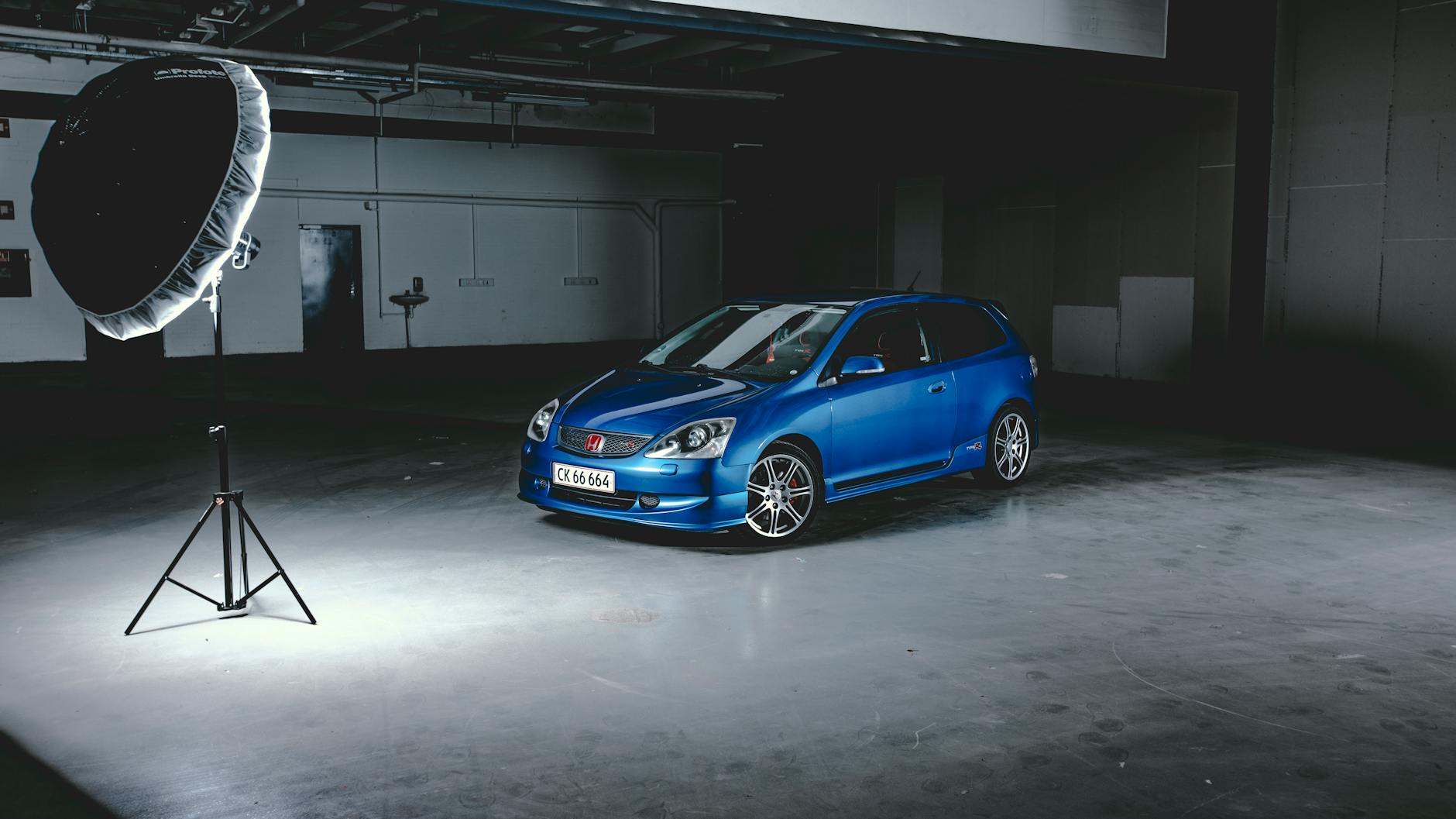
Differential Upgrade Pathways for the Honda Civic Type R (FK8/FK2): LSD and Final-Drive Compatibility
The Honda Civic Type R has earned its reputation as one of the most capable front-wheel-drive track weapons ever built. From the FK2 generation’s raw, VTEC-enhanced aggression to the FK8’s refined chassis dynamics, these hot hatches deliver spectacular performance straight from the factory. Yet for enthusiasts pushing beyond canyon carving into serious track-day territory, the stock differential setup often becomes the limiting factor in extracting maximum performance. Understanding your upgrade options—whether you’re running a stock-power FK8 or a fully built FK2—can transform your Type R from an already impressive performer into a true track-day terror.
Understanding the Factory Differential Setup
The FK8 (2017-2021) and FK2 (2015-2016) Civic Type R arrived with notably different factory differential configurations, making it essential to understand what you’re working with before planning upgrades.
The FK2 came equipped with a helical limited-slip differential from factory—a genuine advantage over its competitors at the time. This mechanical LSD uses helical gears to automatically route torque to the wheel with better traction, engaging progressively based on torque load rather than requiring driver input. While not as aggressive as a competition-style unit, it’s remarkably effective for street and light track use, and many owners mistakenly believe they need to replace it when an upgrade might actually be the better choice.
The FK8, despite its track-focused chassis, shipped with a standard open differential. This design allows both drive wheels to rotate at different speeds—essential for cornering—but routes all torque to the wheel with the least traction. In aggressive track scenarios, this means the inside wheel spins freely while the outside wheel struggles for grip, creating the dreaded understeer characteristics that betray the car’s potential. Honda’s engineering team focused on chassis dynamics and aerodynamics rather than drivetrain hardware, assuming many buyers would pursue upgrades as needed.
For both generations, the final drive ratio is approximately 4.11:1 in the FK8 and 4.67:1 in the FK2, delivering exceptional acceleration but potentially limiting top-end performance when combined with larger wheel diameters.
PRO TIP: Before investing in differential upgrades, verify your current setup by lifting the front wheels and attempting to turn them in opposite directions. If both wheels spin freely together, you have an open diff. If you feel resistance or binding, your FK2 likely has the helical LSD.
Helical Limited-Slip Differentials: The Direct Replacement Path
For FK8 owners seeking the most straightforward upgrade path, a helical LSD offers the most accessible performance improvement. This style mimics the FK2’s factory equipment, providing seamless operation without the aggressive engagement characteristics of clutch-type units.
Helical LSDs from manufacturers like Cusco, OS Giken, and AGP Racing replace the entire differential housing as a complete assembly, maintaining factory-like fitment while delivering meaningful performance gains. These units typically provide 40-60% torque bias toward the driven wheel with better traction, engaging smoothly enough for daily driving while transforming track behavior.
The Cusco RS Type LSD represents one of the most popular choices for the Type R platform. Its helical gear design provides automatic, progressive engagement with minimal noise—critical for maintaining driveability. Installation requires dropping the subframe for comprehensive access, with most shops quoting 6-8 hours of labor. Expect to pay between $1,800 and $2,400 for the unit itself, plus installation costs.
For those seeking more aggressive engagement, the OS Giken Super Lock LSD provides a more pronounced torque bias, noticeable immediately upon hard acceleration out of corners. This makes it ideal for competitive autocross or track-day environments where extracting every last tenth matters.
Maintenance requirements for helical units are minimal—primarily fluid changes every 30,000-50,000 miles with quality gear oil, typically 75W-90 or 80W-90 viscosity depending on manufacturer specifications.
Clutch-Type Limited-Slip Differentials: Competition-Grade Performance
Stepping up the performance ladder brings clutch-type LSDs into consideration—these units use a stack of friction plates to mechanically lock the differential gears together, providing much more aggressive torque transfer than helical designs.
The Mishiya Y65F and W5F from Kaaz represent the competition-grade options many serious track enthusiasts eventually gravitate toward. These units can provide torque bias exceeding 80%, essentially forcing both wheels to drive regardless of traction conditions. This eliminates wheelspin entirely from the inside wheel during aggressive corner entry, allowing you to corner at speeds that would overwhelm a helical or open differential.
Clutch-type LSDs require more maintenance consideration than helical units. The friction plates will eventually wear, typically necessitating replacement every 40-60 track hours depending on driving intensity and fluid maintenance. Preload adjustment becomes critical—set too aggressively and the car will lurch during low-speed maneuvers; too loosely and the unit fails to provide meaningful benefit.
Installation mirrors helical units in complexity, though some clutch-type units can be fitted without completely removing the subframe in ideal conditions. Budget $2,500-$3,500 for quality units plus installation, with ongoing maintenance costs of $300-$500 every two to three years for plate replacement and adjustment.
The driving characteristic difference is immediate and dramatic. Where a helical unit smooths transitional behavior, a clutch-type LSD immediately hooks up the inside wheel, often causing the car to rotate more aggressively than drivers expect initially. Proper suspension settings become more critical with these units—the differential will expose chassis setup weaknesses that an open or helical unit masked.
Torque-Vectoring Systems: The Technology Frontier
For the most technology-forward owners, torque-vectoring systems represent the bleeding edge of differential technology. These electronically controlled units can actively route torque side-to-side in response to driver inputs, sensor data, and driving conditions—providing capability no mechanical LSD can match.
Honda’s own Active Yaw Control, available in some JDM and aftermarket forms, uses electronic clutches to dynamically control torque distribution. Combined with the car’s stability control sensors and steering angle input, these systems can initiate rotation before the driver even feels the car beginning to push.
The Drexler Motorsport torque-vectoring differential exemplifies this approach. By using individual clutch packs for each half-shaft, controlled electronically, Drexler’s system can route 100% of available torque to either wheel at any moment. The result is essentially an infinitely adjustable LSD that responds to driving conditions in real-time. Want more rotation for drift? Full torque to the outside wheel. Need stability in wet conditions? Balanced torque across both wheels.
The trade-off comes in complexity, cost, and weight. These systems add 15-30 pounds compared to stock, require electronic integration with the car’s CAN bus, and demand proper calibration to function correctly. Installation costs frequently exceed $6,000 when all is said and done, making these practical only for dedicated competition vehicles.
For track-day enthusiasts short of professional competition, the simpler mechanical solutions typically provide more value. The exception is vehicles already running significant power modifications where electronic control can optimize traction management in ways mechanical units cannot address.
Axle-Shaft Reinforcement: Protecting Your Investment
Any differential upgrade increases stress on the entire drivetrain, making axle-shaft reinforcement essential for serious use. The stock half-shafts on both FK8 and FK2 were designed for substantially less than the Type R’s potential output, and aggressive LSD engagement can quickly overwhelm them.
Upgraded axle shafts from companies like Driveshaft Shop, Ksport, and Hasport use stronger materials—typically 300M or similarly rated alloy steel—and improved CV joint designs to handle the increased torque loads. These aren’t about extracting more power; they’re about surviving the torque your upgraded differential can now deliver.
Signs you need axle upgrades include clicking or popping during hard acceleration, visible movement when the car is stationary with the wheels on the ground, or—in severe cases—complete axle failure during track sessions. Prevention is substantially cheaper than repair, with quality upgraded shafts running $800-$1,200 for the pair.
Consider reinforcement even for street-only builds, as the acceleration characteristics of an LSD can surprise you in unexpected traction scenarios—a wet parking lot or patch of gravel can suddenly place extreme loads on components never challenged by the stock differential.
PRO TIP: When installing an LSD, this is the ideal time to upgrade axles since you’ll have complete access. Budget for the upgrade simultaneously rather than facing a second installation later.
Final-Drive Compatibility and Gear Selection
The final drive ratio profoundly affects your Type R’s character, and upgrading differentials opens opportunities to modify this fundamental specification.
A shorter final drive (numerically higher, like 4.67:1) improves acceleration but reduces top speed and increases engine RPM at highway cruise. This suits vehicles with significant power modifications where acceleration matters more than highway comfort.
A longer final drive (numerically lower, like 3.90:1) enables higher top speeds and relaxed highway cruising, though it sacrifices launch performance. This might suit turbocharged builds where power comes on strong at higher RPM anyway.
Many helical and all LSD units are available with different final drive options, though the factory transmission’s gear set must match to maintain proper integration. The FK8 transmission from the Performance trim or the JDM FK8 Type R (which came with a 6-speed) offers different gear sets that can be swapped for those seeking optimization.
For most track-day builds, the factory 4.11:1 final drive in the FK8 strikes an excellent balance between acceleration and the higher speeds tracks demand. Unless you’re running significantly taller tires than stock or seeking particular characteristics, staying with the factory ratio typically proves wise.
Making the Right Decision for Your Use Case
Choosing the correct differential upgrade requires honest assessment of your driving environment and goals. Street-focused drivers with occasional track days will find the helical LSD provides all the improvement they need—the FK8 transforms from understeer-prone to genuinely capable without aggressive behavior or maintenance burden.
Dedicated track enthusiasts seeking every advantage will benefit from clutch-type LSDs, accepting the additional maintenance for significantly more aggressive engagement. This is particularly true for drivers running coilovers and significant chassis modifications where the differential becomes the next logical frontier.
The exceptional investment in torque-vectoring systems only makes sense for those competing at the highest levels or running significant power modifications where electronic management provides meaningful advantages over mechanical solutions. For the majority of Type R enthusiasts, this technology remains aspirational rather than practical.
Regardless of your path, upgrading your differential unlocks potential that Honda’s engineers knew existed but left for you to discover. The Type R’s chassis simply demands better traction than its stock hardware can provide. Your choice of upgrade transforms this knowledge into capability—one that rewards every penny invested.