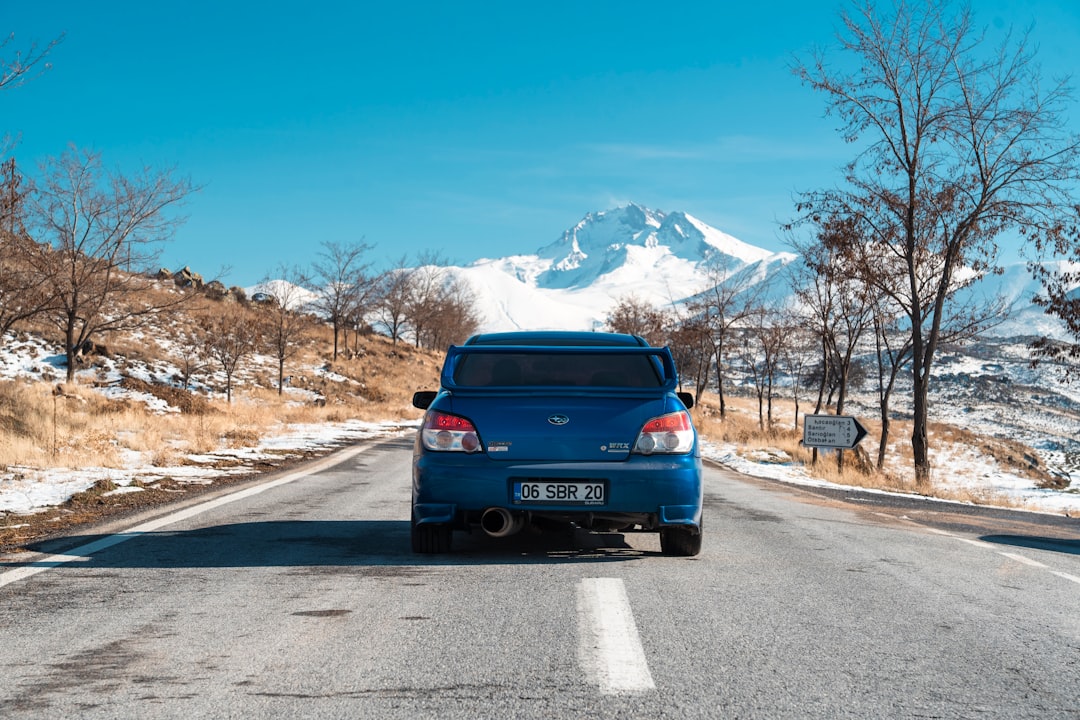
Subaru Impreza (GD/GG Chassis, 2002–2007): All-Wheel-Drive Versatility and Rally Heritage
The Subaru Impreza GD/GG chassis represents a pivotal moment in automotive history—the moment when rally-bred technology truly crossed into the mainstream compact car market. Produced from 2002 to 2007, this generation delivered the legendary Symmetrical All-Wheel Drive system and Subaru’s horizontally-opposed boxer engine to everyday drivers who simply wanted a capable, practical vehicle that could handle whatever conditions they encountered.
For those seeking capability in varied weather conditions without diving into the high-performance WRX or WRX STI variants, the standard Impreza models offered an compelling package. This comprehensive guide examines everything prospective buyers need to know about this iconic generation, from technical specifications to long-term ownership considerations.
Why the GD/GG Impreza Dominated Its Era
The second-generation Impreza arrived in showrooms with several compelling arguments for why it should be your next compact car. Subaru had spent decades perfecting its all-wheel-drive systems in rally competition, and the GD/GG chassis represented the most accessible expression of that technology to date.
The All-Wheel Drive Advantage
Unlike competitors who offered AWD as an expensive option or limited it to specific trims, Subaru made Symmetrical All-Wheel Drive standard across nearly every Impreza variant. This permanent AWD system continuously distributes power to all four wheels, providing exceptional grip on wet roads, light snow, and gravel. For buyers in regions experiencing seasonal weather extremes, this factory-fitted capability eliminated the need for costly aftermarket solutions or switching between winter and summer tires.
The system employs a viscous center differential that can send up to 50% of torque to the rear wheels when front-wheel slip is detected. Combined with the boxer engine’s low center of gravity—achieved by horizontally opposing the cylinders—the Impreza demonstrated remarkable handling balance that inspired confidence in less experienced drivers.
Rally Heritage Meets Practicality
Subaru’s competition successes weren’t merely marketing talking points; they translated directly into engineering excellence. The stiffened chassis, developed with motorsports inputs, provided the structural integrity necessary for both safety and dynamic performance. Subaru claimed the GD chassis achieved 148% greater torsional rigidity and 82% improved beam rigidity compared to the previous generation—not merely numbers, but measurable improvements in crash protection and driving dynamics.
Buyers who might never drive on a rally stage nonetheless benefited from suspension geometry refined through thousands of competition miles. The MacPherson struts in front and the multi-link rear suspension delivered composed handling that felt far more sophisticated than the Impreza’s price point suggested.
The Boxer Engine Legacy
The horizontally-opposed four-cylinder engine remains Subaru’s signature—and for good reason. By laying the cylinders flat, the engine sits lower in the chassis than traditional inline-four designs, dropping the center of gravity significantly. This configuration reduces body roll during cornering and improves steering response.
For the non-turbo models, the naturally-aspiratedEJ251 2.5-liter engine produced 165 horsepower in early models, with later versions bumping output to 173 horsepower. While these figures might seem modest against today’s standards, the engine’s broad torque curve and the AWD system’s traction meant real-world acceleration felt more responsive than raw numbers suggested.
PRO TIP: The EJ251 and EJ253 engines in this generation are known for head gasket issues. When inspecting a potential purchase, request service records showing head gasket replacement or be prepared to budget for this preventive repair.
Key Competitors and Target Audience
Understanding where the Impreza fits requires examining its competitive landscape. Subaru positioned the GD/GG Impreza against several formidable rivals, each offering distinct advantages.
Primary Competitors
Mitsubishi Lancer represented the Impreza’s most direct competitor in the AWD compact segment. The Lancer offered similar packaging with optional AWD, though not as standard equipment. The Lancer’s strongerpoint lay in its 4G92 and 4G93 engine options, which proved robust performers. Where the Impreza won was cabin space and rear seat accommodation—critical factors for families.
Toyota Corolla competed at the practical end, offering front-wheel-drive only but with legendary reliability expectations and superior resale values. The Corolla appealed to buyers prioritizing minimal ownership hassles over all-weather capability.
Honda Civic took a different path, emphasizing fuel efficiency and engaged handling through front-wheel drive. The Civic hybrid and natural aspire options attracted environmentally-conscious buyers, though it couldn’t match the Impreza’s foul-weather versatility.
Mazda3 arrived mid-generation (2004) and offered striking design alongside confident handling. However, like the Civic, it lacked standard AWD—a fundamental distinction in inclement climates.
Target Audience
The GD/GG Impreza served multiple buyer profiles. Young professionals in northern climates found the all-weather capability essential for year-round commuting. Outdoor enthusiasts—skiers, hikers, mountain bikers—appreciated the wagon’s cargo versatility and the go-anywhere confidence that AWD provided. Families valued the five-passenger seating and the five-door practicality offered in the GG wagon variant. Enthusiasts often began their performance car journeys here, planning eventual upgrades to WRX specifications or simply enjoying the balanced chassis dynamics.
Technical Specifications
The following table provides detailed specifications across key Impreza variants from this generation:
| Variant/Trim | Engine | Displacement | Power | Torque | Transmission | Drivetrain | Length × Width × Wheelbase (mm) | Curb Weight (kg) | Fuel Tank (L) | 0-100 km/h (sec) | Top Speed (km/h) |
|---|---|---|---|---|---|---|---|---|---|---|---|
| 2.0i GX (Sedan) | EJ201 NA | 1994cc | 92 kW (125 PS) | 184 Nm | 5MT/4AT | AWD | 4415 × 1740 × 2525 | 1255 | 60 | 10.2 | 190 |
| 2.0i RX (Sedan) | EJ201 NA | 1994cc | 92 kW (125 PS) | 184 Nm | 5MT/4AT | AWD | 4415 × 1740 × 2525 | 1265 | 60 | 10.2 | 190 |
| 2.5i RS (Sedan) | EJ251 NA | 2457cc | 112 kW (152 PS) | 223 Nm | 5MT/4AT | AWD | 4415 × 1740 × 2525 | 1310 | 60 | 8.8 | 200 |
| 2.0 WRX (Sedan) | EJ205 Turbo | 1994cc | 160 kW (218 PS) | 292 Nm | 5MT/4AT | AWD | 4465 × 1740 × 2525 | 1340 | 60 | 6.2 | 230 |
| 2.5 WRX (Sedan) | EJ255 Turbo | 2457cc | 169 kW (230 PS) | 319 Nm | 5MT/4AT | AWD | 4465 × 1740 × 2525 | 1385 | 60 | 5.9 | 235 |
| 2.0 WRX STI | EJ207 Turbo | 1994cc | 195 kW (265 PS) | 392 Nm | 6MT | AWD | 4415 × 1740 × 2525 | 1470 | 60 | 5.0 | 250 |
| 2.5 WRX STI | EJ257 Turbo | 2457cc | 206 kW (280 PS) | 407 Nm | 6MT | AWD | 4415 × 1740 × 2525 | 1470 | 60 | 4.8 | 255 |
Note: Specifications vary by market. Horsepower figures reflect Japanese domestic market ratings; export markets showed varying power due to certification requirements. Wagon variants (GG chassis) add approximately 30-40kg and 100mm to overall length.
Additional Specifications
Fuel Consumption (Official EPA Estimates):
- 2.0L NA models: 21 mpg city / 28 mpg highway
- 2.5L NA models: 21 mpg city / 27 mpg highway
- 2.0L Turbo (WRX): 20 mpg city / 27 mpg highway
- 2.5L Turbo (WRX): 20 mpg city / 26 mpg highway
Real-World Fuel Economy:
- 2.5i models typically achieve 22-25 mpg combined
- WRX models return 18-22 mpg depending on driving style
- Expect 2-3 mpg decrease with automatic transmission
Towing Capacity: 907 kg (2000 lbs)—adequate for small trailers or utility carts
Cargo Volume: 344 liters (sedan) / 416 liters (wagon) expanding to 1,336 liters (wagon rear seats folded)
Styling Cues and Design Evolution
The GD/GG generation represented a deliberate departure from the previous GC/GF Impreza’s somewhat dated appearance. The new design embraced sharper creases, more aggressive lighting, and a broader stance that communicated capability without shouting about it.
Design Language
The sedan’s fastback roofline—sometimes called the “bug-eye” generation due to its distinctive headlights—proved polarizing but ultimately became iconic. The GG wagon variant offered practical five-door packaging with only minor aesthetic sacrifices compared to the sedan. Subaru’s designers emphasized the front grille’s prominent “SUBARU” badge—a styling cue now associated with the brand’s heritage—while employing smoother body panels than the rally-inspired previous generation.
For the 2005 refresh, Subaru softened the bug-eye headlights in favor of more conventional units, updated the front grille, and refined interior materials. This mid-cycle update addressed some criticisms of the initial model’s interior hard plastics while maintaining the core design philosophy.
Materials and Build Quality
Build quality fell squarely in the acceptable-to-good range for the segment. Exterior paint measured approximately 100-120 microns in thickness—competitive for the era though not exceptional. Interior materials employed hard plastics throughout, though assembly quality remained tight with fewer rattles developing than some competitors.
The driving position offered excellent visibility thanks to relatively thin A-pillars and elevated seating. The straightforward dashboard layout prioritized function over flair, with controls that became intuitive quickly. Leather seating appeared in Limited trims, though cloth remained standard across most variants.
How the Design Has Aged
Twenty years on, the GD/GG Impreza’s styling has aged respectably if not gracefully. The bug-eye headlights have developed a nostalgic appeal, with enthusiast communities specifically seeking early examples. The wagon variant has proven particularly popular among outdoor enthusiasts who value its versatile cargo area.
Paint fade affects darker colors more noticeably, particularly on horizontal surfaces like the hood and roof. Clearcoat degradation appears on original-paint examples in harsh sunlight climates. The headlight assembliesyellowing represents a common aged appearance issue, though replacement units remain reasonably priced.
Resale values have stabilized with theGD/GG generation now firmly in classic car territory, though STI examples command premiums reflecting their performance heritage and limited production numbers.
Rust, Paint, and Common Cosmetic Issues
As these vehicles approach their third decade, understanding their vulnerable areas becomes essential for buyers.
Rust-Prone Areas
Rear wheel arches represent the most notorious corrosion location. The combination of road salt exposure, stone chips, and moisture retention creates perfect conditions for rust development. Inspect carefully by lifting the rear interior carpeting and examining the arch wells.
Rear subframe and suspension mounting points suffered from inadequate corrosion protection in early-production examples. Salt belt residents should pay particular attention to these areas.
Door bottoms and rocker panels show corrosion when original paint has been compromised by stone chips or accident damage.
Front lower control arms were subject to recall for corrosion-induced failure in certain states requiring salt application during winter. Verify recall completion status before purchase.
Paint Quality Concerns
The original paint system employed single-stage paint on some early examples, making compound-and-polish restoration difficult without paint correction knowledge. Clearcoat adhesion proved adequate but not exceptional. The 2004 and later models generally employed improved clearcoat systems demonstrating better UV resistance.
Pearl white and various blue shades have shown better longevity than darker colors. Silver and light gray colors mask minor imperfections well.
Common Cosmetic Issues
Headlight housing yellowing affects nearly all preserved examples, with UV exposure the primary culprit.
Window seal deterioration leads to water leaks, particularly affecting the driver’s side. Front door seals typically show earliest wear.
Fog light cracking occurs from stone impacts in many examples—the housing rather than the lens typically fails.
Wheel curb rash remains common given the Impreza’s enthusiast community; refurbished wheels represent a significant portion of available used inventory.
Ownership Costs and Practical Considerations
Fuel Consumption Analysis
Real-world fuel economy frequently exceeds official estimates, particularly in turbo models driven enthusiastically. The 2.5-liter naturally aspiratedengine typically achieves 22-25 mpg in mixed driving, with highway cruising capable of 28 mpg. WRX turbo models return 18-22 mpg, with heavy right-foot driving dropping figures below 18 mpg.
For buyers concerned about fuel costs, the naturally aspirated2.0L or 2.5L models offer meaningful savings over turbo variants—often 3-4 mpg improvement representing hundreds of dollars annually at typical driving frequencies.
Insurance Considerations
Insurance costs vary significantly by variant. The base 2.0i and 2.5i models typically rate in standard sedan categories with moderate premiums. WRX variants experience significant rating bumps—often 30-40% higher—due to performance image and parts cost considerations. STI models command the highest premiums, sometimes exceeding twice the base model rates.
Multi-car discounts, defensive driving course completion, and higher deductibles provide meaningful savings opportunities. Usage-based insurance programs offered by major carriers can reduce premiums for low-mileage drivers.
Road Tax Implications
In most regions, road tax calculations base on engine displacement or emissions. The 2.0-liter engines incur lower annual registration fees than 2.5-liter variants—a few hundred dollars difference annually depending on jurisdiction. Turbocharged variants often face premium classifications in emissions-based tax systems.
Parts Affordability
Parts availability remains generally good, though some components have experienced price increases as the vehicle ages and parts availability contracts. The WRX STI’s specialized components—turbochargers, intercoolers, specialized intake—command significant premiums.
Common replacement parts and approximate costs:
- Head gasket set: $150-300 (DIY) / $800-1200 (professional)
- Timing belt kit (where applicable): $200-400
- Front brake rotor and pad set: $150-250 per axle -离合器 (clutch): $400-700 kit
- Alternator: $250-400
- Starter motor: $200-350
Maintenance Intervals
Subaru recommended the following service intervals for normal usage conditions:
- Oil and filter: Every 7,500 km or 12 months (whichever comes first) using synthetic recommended
- Air filter: Every 30,000 km -Spark plugs: Every 60,000 km (iridium recommended)
- Timing belt (where equipped): Every 105,000 km (typically non-interference engines in this generation)
- Transmission fluid: Every 60,000 km (especially important for AWD system)
- Brake fluid: Every 30,000 km
- Coolant: Every 60,000 km (or 4 years)
Typical Service Expenses
Standard maintenance at independent shops typically runs 20-40% below dealer pricing. A full service including oil, filter, inspection, and fluids generally costs $150-250 at independent shops versus $250-400 at dealerships.
Major services—timing belt replacement, head gasket repair, or transmission service—represent significantly larger investments. Budgeting $1,500-2,500 for major services depending on parts and labor rates reflects realistic expectations.
PRO TIP: Establishing a relationship with an independent Subaru specialist often proves more cost-effective than dealer service while maintaining warranty coverage for covered repairs.
Crash Test Results
Safety ratings from this generation provide important context for prospective buyers.
IIHS (Insurance Institute for Highway Safety) Results
Testing applied to 2002-2007 models manufactured after September 2001, which included structural modifications for improved occupant protection:
- Moderate Overlap Front: Good (original test)
- Side Impact: Good
- Head Restraints & Seats: Good (Dynamic), Acceptable (Geometry)
- Roof Strength: Not tested (methodology different at time)
The structural modifications implemented for post-September 2001 production significantly improved frontal crash performance over early production examples.
NHTSA (National Highway Traffic Safety Administration) Ratings
- Frontal Crash: 4 stars (driver), 5 stars (passenger)
- Side Crash: 4 stars (front), 4 stars (rear)
- Rollover: 4 stars (2WD), Not rated (AWD was still subject to different calculation methodology)
ANCAP (Australia) Results
Testing the 2001 4-door sedan produced:
- Overall: 4 stars
- Frontal offset: 12.77/16 (Good)
- Side impact: 14.72/16 (Good)
These scores represented competitive performance for the period, though safety expectations have evolved significantly since.
Electronic stability control appeared as standard equipment on later production examples but wasn’t universally fitted to all model years—a consideration for buyers prioritizing modern safety systems.
Head Gasket Concerns: What Buyers Need to Know
The infamous head gasket issues affecting Subaru’s EJ25-series engines warrant specific discussion. While not every engine experiences failure, the prevalence justifies buyer attention.
The Problem
The multi-layer steel (MLS) head gaskets employed in these engines could experience failure, typically manifesting as external oil or coolant leaks, internal coolant intrusion into combustion chambers (producing white exhaust), or loss of compression. Failure modes varied, but consequences uniformly required expensive repairs.
Symptoms
Warning signs include:
- Coolant consumption without visible leaks
- Oil contamination or milky substance on oil dipstick
- White exhaust smoke (particularly at startup)
- Overheating episodes or temperature gauge fluctuations
- Loss of power or rough idle
Prevention and Resolution
Many owners opted for proactive head gasket replacement using improved designs—typically multi-layer steel gaskets replacing the original composite units. This preventive approach often accompanies other repairs like timing belt service, allowing economy of scope.
Budget $800-1,200 for professional head gasket replacement, including necessary ancillary repairs. Doing this work preventatively—rather than in failure mode with possible head damage—represents genuine economy.
Market Perception
The head gasket reputation has had lasting effects on the Impreza’s resale values and ownership perceptions. Well-documented maintenance histories commanding price premiums reflect this reality. Conversely, examples with documented head gasket replacement or replacement engines command values more closely approaching competitive models.
Enthusiast Appeal and Lancer Comparison
Enthusiast Appeal
The GD/GG Impreza spawned a devoted enthusiast community, drawn by several key factors:
Tuning Potential: While this article focuses on non-STI models, the standard Impreza’s sturdy drivetrain and robust transmission designed handle considerable power increases—providing a foundation for performance upgrades once owners caught the bug.
Active Safety Margin: The AWD system and balanced handling provided forgiving dynamics that encouraged driver skill development on public roads—enthusiasts could explore limits without the extreme consequences of rear-wheel-drive cars.
Community Resources: Parts availability, aftermarket support, and community knowledge bases remain robust decades later, with DIY friendly procedures for many common modifications.
Rally Heritage: Even non-STI Imprezas carry the lineage—the same chassis, similar engines (before turbocharging), and shared platform created a path to higher performance for those choosing that route.
Comparison to Mitsubishi Lancer
The Mitsubishi Lancer serves as the Impreza’s natural comparison point—with key distinctions worth understanding:
Drivetrain Philosophy: Subaru made AWD standard; Mitsubishi offered it as optional equipment. For buyers requiring all-weather capability, the Impreza’s standard-fit system represented both value and confidence.
Engine Character: The Lancer’s 4G93 and 4G92 engines proved robust but less characterful than Subaru’s boxer design. The low center of gravity advantage remained with Subaru.
Cabin Space: The Impreza offered genuinely usable rear seat accommodation—critical for passenger-carrying duties. The Lancer’s rear seat proved tighter.
Resale Values: Both vehicles experienced depreciation following similar patterns, though the Impreza’s STI halo has maintained stronger interest in the complete range.
Ownership Costs: Parts availability and maintenance expenses ran approximately similar, though Lancer’s simpler (non-AWD) drivetrain in base models delivered modestly lower repair costs when issues arose.
For buyers prioritizing capability in adverse conditions, authentic enthusiast heritage, or future-proofing for potential performance modifications, the Impreza offers distinct advantages. The Lancer appeals to buyers prioritizing minimal complexity, Japanese market tuning heritage, and straightforward practicality without AWD requirement.
Verdict: Is the GD/GG Impreza Right for You?
The second-generation Subaru Impreza offers compelling value in today’s used car market—providing genuine all-wheel-drive capability, rally-proven chassis dynamics, and practical five-passenger accommodation at competitive price points.
Consider this generation if:
- You require confident all-weather traction without aftermarket modifications
- Rally heritage and enthusiast community appeal matter to you
- You appreciate the boxer engine’s distinctive character and low center of gravity
- Wagon practicality fits your lifestyle needs
- You possess mechanical aptitude or access to independent Subaru specialists
Look elsewhere if:
- Front-wheel drive meets your capability requirements
- Minimal maintenance concerns outweigh performance preferences
- You prioritize maximum fuel economy over all-weather confidence
- Modern safety features represent critical requirements
- Strict budget constraints restrict potential repair allowances
For those recognizing the GD/GG Impreza’s strengths, clean examples with documented maintenance—particularly those showing head gasket service, timing belt replacement, and transmission fluid service—represent genuine finds. These vehicles reward informed buyers while presenting challenges typical of vehicles their age.
The Subaru Impreza’s enduring popularity reflects something genuine: a vehicle that translated rally technology into everyday practicality without sacrificing the engagement that makes driving worthwhile. Twenty years later, that fundamental appeal remains intact.
Have experience with the GD/GG Impreza? Questions about a specific variant or market? Share your thoughts in the comments below.