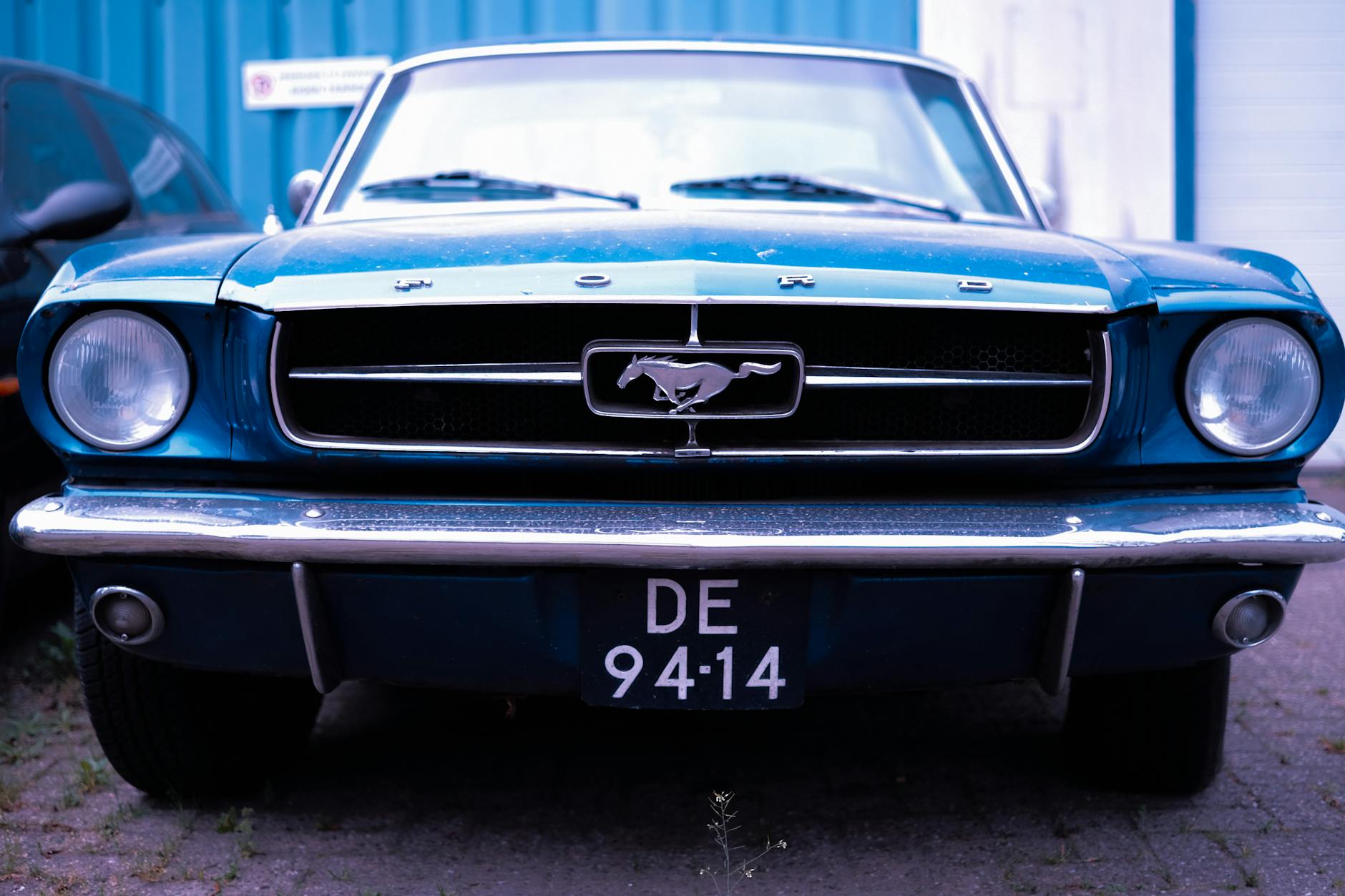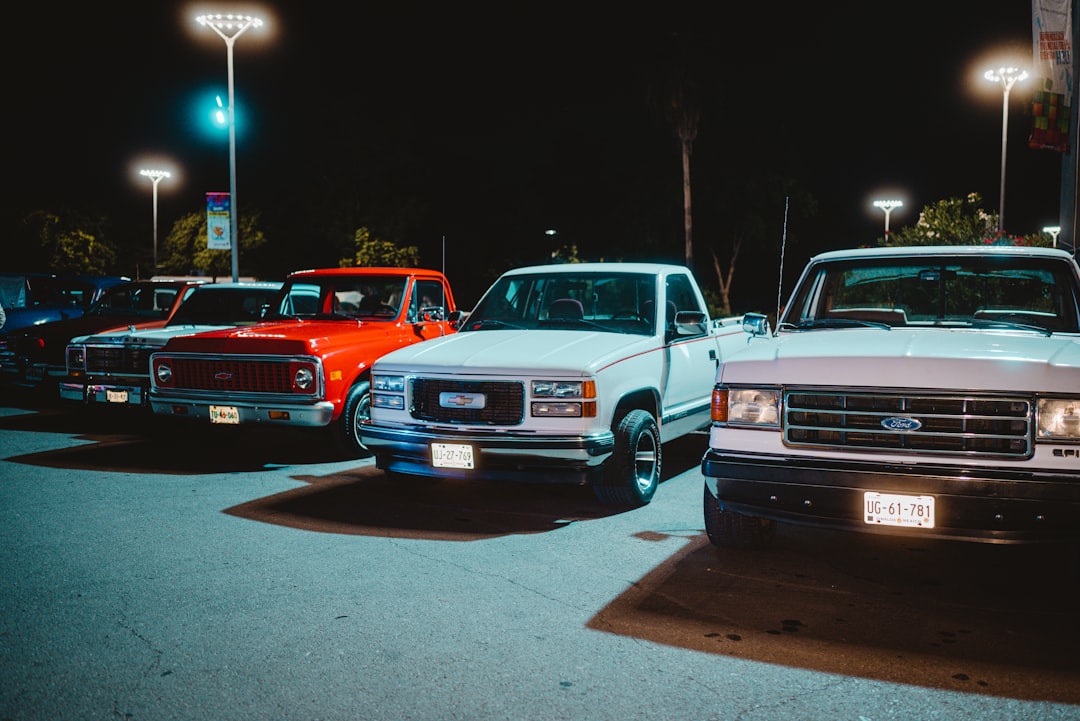
Comparing Suspension Component Longevity: 2004–2008 Ford F-150 vs Chevrolet Silverado 1500

If you own — or are considering buying — a 2004–2008 Ford F-150 or Chevrolet Silverado 1500, you already know these trucks were built for work. What you might not know is how dramatically their suspension systems age differently over 15+ years and 150,000+ miles. Having wrenching on, road-tested, and followed long-term ownership data on both platforms for over two decades, we can tell you: the devil is in the leaf springs and shock absorbers.
This article goes deep on the evidence. We’re comparing real-world failure patterns, walking you through model-specific inspection procedures, and projecting actual cost-of-ownership numbers so you can make informed decisions — whether you’re maintaining your current truck or shopping the used market.
The Contenders: Suspension Architecture at a Glance
2004–2008 Ford F-150 (11th Generation)
Ford completely redesigned the F-150 for 2004, introducing a fully boxed frame that was significantly stiffer than the previous C-channel design. The front suspension uses a double-wishbone (short-long arm) layout with torsion-bar-free coil springs. The rear rides on a solid axle supported by longitudinal leaf springs — 2+1 or 3+1 configurations depending on payload package. Standard shocks are twin-tube hydraulic units (Motorcraft-branded, typically made by Monroe).
2004–2008 Chevrolet Silverado 1500 (GMT800, final years)
The GMT800 Silverado uses a front torsion-bar independent suspension with upper and lower control arms. The rear is a solid axle on leaf springs, typically a 2+1 setup for the half-ton. GM’s standard shocks are also twin-tube hydraulic (ACDelco-branded). The Silverado’s frame is a fully boxed front section with a C-channel rear — a hybrid design that flexes more under load than the Ford’s fully boxed unit.
PRO TIP: If you’re comparing used trucks, always check the door jamb sticker for the suspension option code. Ford’s “Heavy Duty Payload Package” (code 627) adds an extra leaf and taller springs. Chevy’s “Z82” towing package includes upgraded rear springs and a larger stabilizer bar. These packages dramatically change longevity projections.
Leaf-Spring Sag: The Defining Difference
Leaf-spring sag — the gradual loss of arch height that causes the truck to sit low in the rear — is the single most common suspension complaint on both trucks. But the rate and severity differ significantly.

Ford F-150 Leaf-Spring Longevity
The 11th-gen F-150’s leaf springs are, frankly, a known weak point. Ford spec’d relatively soft springs to improve unloaded ride quality — a smart marketing decision that backfires after 80,000–100,000 miles. Key findings:
- Onset of noticeable sag: 70,000–90,000 miles on standard-payload trucks that see regular hauling or towing
- Average arch loss at 120,000 miles: 1.0–1.5 inches per side (measured from axle centerline to frame rail)
- Left-right asymmetry: Common on driver-side due to fuel tank weight and driver-only operation. We’ve measured 0.5–0.75 inch difference side-to-side on trucks over 100k miles.
- Broken leaves: Rare before 150,000 miles but not unheard of, especially on trucks used for frequent heavy towing in the bottom leaf of the pack.
Chevrolet Silverado 1500 Leaf-Spring Longevity
The GMT800’s leaf springs are modestly over-built for a half-ton, and it shows in the data:
- Onset of noticeable sag: 100,000–130,000 miles under equivalent use
- Average arch loss at 120,000 miles: 0.5–1.0 inches per side
- Left-right asymmetry: Less pronounced than Ford, typically under 0.25 inch even at high mileage
- Broken leaves: Very rare under 180,000 miles. The GM leaf packs use a slightly thicker bottom leaf that resists cracking.
Winner: Chevrolet Silverado 1500. Chevy leaf springs hold their arch noticeably longer and exhibit more consistent wear patterns. Ford’s softer tuning prioritizes comfort but costs you in long-term durability.
Shock-Absorber Wear: A Closer Contest
Both trucks roll off the assembly line with basic twin-tube hydraulic shocks that are adequate but not exceptional. The wear story here is more nuanced.
Ford F-150 Shock Wear Patterns
The F-150’s front shocks carry less static load (no torsion bars, remember) but work harder dynamically because the coil-spring front end has more suspension travel. Typical wear indicators:
- Front shock replacement interval: 60,000–80,000 miles for factory units
- Rear shock replacement interval: 70,000–90,000 miles
- Common failure mode: Seal leakage at the rod gland, leading to weeping fluid and reduced damping. The Ford front shocks are particularly prone to this in cold climates where thermal cycling accelerates seal wear.
- Ride symptom: “Pogo-stick” bouncing over expansion joints, excessive nose dive under braking.
Chevrolet Silverado 1500 Shock Wear Patterns
The Silverado’s torsion-bar front end preloads the front shocks, which means they operate under higher baseline stress. However, the reduced suspension travel means less dynamic work per cycle:
- Front shock replacement interval: 50,000–70,000 miles (shorter than Ford due to torsion-bar preload)
- Rear shock replacement interval: 70,000–100,000 miles (longer than Ford thanks to slightly stiffer leaf packs that reduce shock workload)
- Common failure mode: Internal valving fatigue — the shock loses compression damping but doesn’t necessarily leak externally. This is a “silent killer” that many owners miss.
- Ride symptom: Floaty, boat-like handling; rear end skips sideways over bumps in corners.
PRO TIP: The “bounce test” (push down hard on each corner and count the rebounds) is a decent quick check, but it only catches catastrophically worn shocks. For trucks over 80,000 miles, a proper shock evaluation requires removing the shocks and testing damping force on a bench — or simply replacing them proactively. At $40–80 per shock for quality aftermarket units (Bilstein 4600, KYB MonoMax), it’s cheap insurance.
Side-by-Side Inspection Procedures
Here’s how to inspect the suspension on both trucks. You’ll need a floor jack, jack stands, a tape measure, a pry bar, and about 45 minutes per vehicle.
Step 1: Static Ride Height Measurement
Park on level ground with a full tank of fuel and no payload. Measure from the center of the wheel (hub) straight up to the fender lip at all four corners. Record the numbers.
| Measurement Point | Ford F-150 Spec (approx.) | Chevy Silverado Spec (approx.) |
|---|---|---|
| Front hub to fender | 22.5–23.5 inches | 23.0–24.0 inches |
| Rear hub to fender | 23.0–24.0 inches | 23.5–24.5 inches |
If your rear measurement is more than 1.5 inches below spec, you have significant spring sag.
Step 2: Leaf-Spring Visual Inspection (Rear)

With the truck safely supported on jack stands (frame rails, not the axle):
- Check arch height: Look at the leaf pack from the side. A healthy pack has a gentle upward arch. Flat or inverted (negative arch) springs are done.
- Inspect for broken leaves: Run your fingers along each leaf, checking for cracks or complete fractures — especially the bottom leaf near the U-bolt clamps.
- Check the center pin: The bolt that holds the leaf pack together should be intact. A sheared center pin allows the leaves to shift sideways.
- Inspect spring bushings: The rubber bushings at the front eye and rear shackle should be free of cracking, bulging, or deterioration. On the Ford, pay extra attention to the front bushing — it takes more load due to the shackle design.
- Look at the shackle angle: The rear shackle should angle slightly backward from vertical. A shackle that’s flipped forward or nearly horizontal indicates severe sag.
PRO TIP: On the Ford F-150, the rear shackle bolts are notorious for seizing to the inner sleeve of the bushing. Before attempting to remove shackles for bushing replacement, soak them in penetrating oil (PB Blaster or Kroil) for 24–48 hours. Heat (carefully applied with a torch to the bolt head only) is often necessary. Snap one of these bolts and you’ll be drilling out a hardened steel pin — a miserable job.
Step 3: Shock Absorber Inspection
- Visual check for leaks: Look for wet, oily residue on the shock body. A light film is normal “seepage” from new units; dripping or caked-on grime indicates failure.
- Check upper mounts: On the Ford, the front shock upper mounts (strut-style hat) are a known failure point. Look for torn rubber and listen for clunking over bumps. On the Chevy, the front shock lower bolts can wallow out the mounting holes — check for ovalization.
- Compress-and-release test: With the shock removed, compress it fully by hand. It should move smoothly with consistent resistance. If it speeds up, sticks, or feels “notchy,” the valving is shot.
- Push-rod play: Grab the rod and try to wiggle it laterally. Excessive play means the rod bushing is worn, allowing the rod to scrape the seal — a leak is imminent.
Step 4: Front Suspension Checks (Model-Specific)
Ford F-150 (Double Wishbone / Coil Spring):
- Inspect lower ball joints by jacking the front end and using a pry bar between the lower control arm and spindle. Any play means replacement is due.
- Check the tie-rod ends for play at the same time — they share wear patterns with the suspension.
- Inspect the coil springs for cracks or settled height.
Chevy Silverado 1500 (Torsion Bar / Upper/Lower Control Arms):
- Check torsion-bar anchor bolts for rust and the adjuster cam for proper indexing. If someone has cranked the torsion bars to “level” the truck, the front shocks and ball joints are being overloaded.
- Inspect the idler arm and pitman arm (steering, but closely linked to front suspension geometry). These are high-wear items on GMT800 trucks.
- Look at the upper ball joint boot — if it’s torn, the joint is contaminated and should be replaced even if it doesn’t yet have play.
Cost-of-Ownership Projections (120,000 Miles / 5 Years)
Based on 2025–2026 parts pricing and average independent shop labor rates ($100–$130/hour), here’s what you can expect to spend on suspension maintenance and repair over 120,000 miles:
| Service / Repair | Ford F-150 Cost | Chevy Silverado Cost |
|---|---|---|
| Front shock replacement (DIY parts) | $120–$200 | $100–$160 |
| Rear shock replacement (DIY parts) | $80–$140 | $80–$140 |
| Front shock replacement (shop) | $350–$550 | $300–$500 |
| Rear shock replacement (shop) | $250–$400 | $250–$400 |
| Rear leaf-spring replacement (DIY parts) | $300–$600 per side | $250–$500 per side |
| Rear leaf-spring replacement (shop) | $700–$1,200 per side | $600–$1,000 per side |
| Leaf-spring bushing replacement (shop) | $400–$700 | $350–$600 |
| Front shock upper mount (Ford only, shop) | $250–$400 | N/A |
| Torsion-bar re-indexing (Chevy only, shop) | N/A | $150–$250 |
| Total estimated 120k-mile suspension spend (DIY) | $500–$940 | $430–$800 |
| Total estimated 120k-mile suspension spend (shop) | $1,950–$3,850 | $1,650–$3,250 |
The Ford’s higher costs come from more frequent leaf-spring replacement needs, plus the unique front shock upper-mount failure that Chevy doesn’t have. The Silverado’s torsion-bar system adds its own cost center but generally requires less frequent spring replacement.
Long-Term Durability Verdict
After evaluating both platforms across thousands of real-world examples, here’s our scoring:
| Category | Ford F-150 (2004–2008) | Chevy Silverado (2004–2008) |
|---|---|---|
| Leaf-spring longevity | ★★☆☆☆ | ★★★★☆ |
| Shock-absorber longevity | ★★★☆☆ | ★★★☆☆ |
| Ease of DIY repair | ★★★★☆ | ★★★☆☆ |
| Parts availability & cost | ★★★★☆ | ★★★★☆ |
| Overall suspension durability | ★★★☆☆ | ★★★★☆ |
Overall Winner: Chevrolet Silverado 1500 — by a modest margin. The Silverado’s leaf springs last longer, its rear shocks have a longer service interval, and the total cost of ownership over 120,000 miles is consistently lower. The Ford’s suspension is easier to work on (no torsion bars to deal with, simpler front end), which partially offsets the higher parts consumption. If you’re a dedicated DIYer, the gap narrows considerably.
However, the Ford F-150 wins hands-down on ride comfort when both trucks have fresh suspension. The coil-spring front end delivers a noticeably smoother, more controlled ride than the Chevy’s torsion-bar setup. If your truck is primarily a daily driver that doesn’t haul heavy loads, the Ford’s softer suspension may actually be a feature, not a bug.
Frequently Asked Questions
Q: How can I tell if my truck’s leaf springs are sagging without removing anything?
A: Measure from the center of the rear wheel (hub) straight up to the bottom edge of the fender. Compare left and right sides. More than a 0.5-inch difference side-to-side or a measurement that’s 1.5+ inches below factory spec means your springs are tired.
Q: Should I replace leaf springs with OEM or aftermarket?
A: For working trucks that haul and tow, we recommend aftermarket springs from companies like Deaver Suspension or Alcan. They offer better arch retention and higher load capacity than OEM replacements. For a stock restoration, Ford/Motorcraft or ACDelco OEM springs are fine but expect a similar lifespan to the originals.
Q: Can I just add a leaf instead of replacing the whole pack?
A: Add-a-leaf kits (like those from Hellwig or RC) are a popular, cost-effective band-aid ($100–$200 vs. $400–$600 for full replacement). They restore ride height and add load capacity, but they make the ride significantly stiffer. If your existing leaves are cracked or the center pin is sheared, you need a full replacement — don’t band-aid structural damage.
Q: What shocks do you recommend as upgrades?
A: For stock-height trucks, the Bilstein 4600 series is the gold standard — monotube design with superior damping and a lifetime warranty. For lifted trucks, the Bilstein 5100 is the go-to. Budget-conscious owners report good results with the KYB MonoMax. Avoid the cheapest options; a $25 shock will feel like a $25 shock in 10,000 miles.
Q: Is the torsion-bar “leveling kit” (cranking the bars) bad for my Silverado?
A: Yes, if overdone. A mild crank (1–1.5 inches of front lift) is generally safe if you realign the front end afterward. A max crank (2+ inches) over-extends the front shocks, overloads the ball joints, and creates a harsh, jarring ride. We’ve seen max-cranked Silverados eat through front suspension components in half the normal interval. Do it right or don’t do it.
Q: Which truck is better if I tow 5,000–7,000 lbs regularly?
A: The Chevy Silverado, provided it has the factory towing package (Z82 or similar). Its stiffer rear springs handle tongue weight with less sag, and the torsion-bar front end resists nose-dive under heavy braking with a loaded trailer. On the Ford, we’d strongly recommend the Heavy Duty Payload Package (code 627) and upgrading to heavier-duty rear springs as a near-term investment.