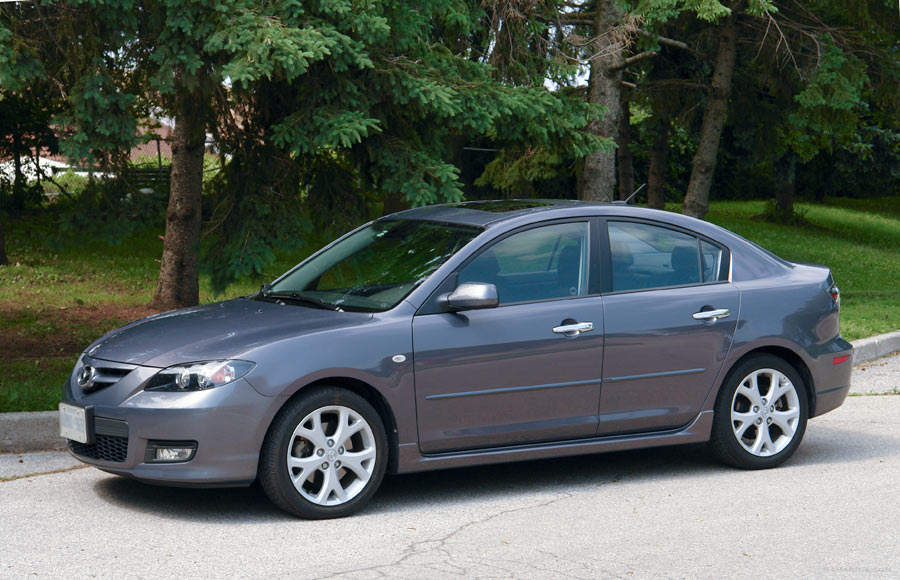
The Mazda 3 (First Generation, 2004–2009): A Stylish and Engaging Compact Hatchback
When Mazda launched the first-generation 3 in 2004, the automotive landscape was dominated by sensible, if somewhat uninspiring, compact cars. The Toyota Corolla and Honda Civic ruled the segment with proven reliability and practicality, but they rarely set pulses racing. Mazda, armed with its new “Zoom-Zoom” marketing philosophy, had other ideas. The Mazda 3 wasn’t just another compact car—it was a statement that driving excitement and everyday practicality could coexist in an affordable package.
Born from the remnants of Ford’s partnership with Mazda, the first-generation 3 replaced the long-serving 323/Familia and marked a dramatic shift in Mazda’s design and engineering direction. The platform, known as the BK, shared components with the Ford Focus C1 architecture but received extensive tuning to deliver the signature Mazda driving experience that enthusiasts would come to appreciate.
Why the First-Generation Mazda 3 Captured Hearts
The Zoom-Zoom Revolution
The Zoom-Zoom campaign wasn’t merely marketing fluff—it represented a fundamental rethinking of what a compact car could be. Mazda invested heavily in chassis development, giving the 3 precise steering, well-controlled body roll, and a suspension system that balanced compliance with genuine sportiness. In an era when most competitors prioritized comfort over engagement, the Mazda 3 offered drivers something genuinely rewarding.
The 2.0-liter and 2.3-liter MZR engines, developed in partnership with Ford but refined by Mazda, delivered smooth, linear power with a willingness to rev that made every drive enjoyable. The 2.3-liter, in particular, felt more eager than many competitors’ offerings, with a broad torque curve that made everyday driving effortless while still rewarding spirited inputs.
Design That Defied Convention
Visually, the first-generation 3 stood apart from its conservative rivals. The five-point grille, swept-back headlights, and pronounced wheel arches gave the car a forward-leaning, athletic stance that promised dynamic capability. The design language, dubbed “Zoom-Zoom” design, featured flowing surfaces and minimal ornamentation—a departure from the chrome-laden styling typical of the early 2000s.
The hatchback variant, in particular, offered distinctive proportions with its sharply raked rear windshield and integrated spoiler. The sedan version maintained the same design cues but with a more traditional three-box silhouette that still looked modern and sophisticated compared to contemporaries like the Toyota Corolla or Nissan Sentra.
Competitive Landscape and Target Audience
The Mazda 3 targeted a broad audience but found particular favor among younger buyers, urban professionals, and driving enthusiasts who refused to compromise on engagement for the sake of practicality. Its primary competitors included:
- Toyota Corolla (E120): The benchmark for reliability, but offered a sedate driving experience and uninspiring design
- Honda Civic (7th and 8th generations): Known for space and efficiency, with sportier Si variants commanding premium prices
- Ford Focus (C1): Shared platform DNA but with different tuning; the Focus offered similar dynamics but with interior quality issues in early models
- Nissan Sentra (B15): Competitively priced but lacked the Mazda’s polish and driving engagement
- Volkswagen Golf (MK4): Premium build quality and European driving feel, but with higher maintenance costs and reliability concerns
The Mazda 3 carved a niche by offering European-style driving dynamics with Japanese reliability and American-style pricing—a combination that resonated strongly with value-conscious enthusiasts.
Technical Specifications
The first-generation Mazda 3 was offered in multiple trim levels and configurations across different markets. Below are the key specifications for major variants:
| Variant/Trim | Engine Options | Transmission | Drivetrain | Dimensions (L×W×H) | Wheelbase | Curb Weight | Fuel Tank | 0-100 km/h | Top Speed |
|---|---|---|---|---|---|---|---|---|---|
| 2.0i Sport (Hatch/Sedan) | 2.0L MZR I4, DOHC, 16V 147 hp @ 6000 rpm 135 lb-ft @ 4500 rpm | 5-speed manual 4-speed automatic | FWD | 4490×1755×1470 mm (sedan) 4420×1755×1465 mm (hatch) | 2640 mm | 1235-1280 kg | 55L | 9.2s (manual) 10.1s (auto) | 205 km/h |
| 2.3i Sport (Hatch/Sedan) | 2.3L MZR I4, DOHC, 16V 160 hp @ 6500 rpm 150 lb-ft @ 4500 rpm | 5-speed manual 4-speed automatic 5-speed automatic (later) | FWD | Same as 2.0i | 2640 mm | 1280-1320 kg | 55L | 8.2s (manual) 9.0s (auto) | 215 km/h |
| 2.0i Standard/Basic | 2.0L MZR I4, DOHC, 16V 143 hp @ 6000 rpm 135 lb-ft @ 4000 rpm | 5-speed manual 4-speed automatic | FWD | Same as 2.0i Sport | 2640 mm | 1210-1260 kg | 55L | 9.5s (manual) 10.4s (auto) | 200 km/h |
| 2.0D (Diesel markets) | 2.0L MZ-CD I4, DOHC, 16V 143 hp @ 3500 rpm 265 lb-ft @ 2000 rpm | 6-speed manual | FWD | Same as 2.0i | 2640 mm | 1310-1360 kg | 55L | 9.8s | 200 km/h |
| MPS/Mazdaspeed 3 | 2.3L DISI Turbo I4 256 hp @ 5500 rpm 280 lb-ft @ 3000 rpm | 6-speed manual | FWD | 4475×1770×1465 mm | 2640 mm | 1430 kg | 55L | 6.1s | 250 km/h |
Additional Technical Details
Chassis & Suspension:
- Front: Independent MacPherson strut with coil springs, stabilizer bar
- Rear: Independent multi-link with coil springs, stabilizer bar (hatch), or independent torsion beam (sedan in some markets)
- Steering: Electric power-assisted (EPAS) on some models, hydraulic on others
- Brakes: Ventilated discs front, solid discs rear (larger on MPS models)
Engine Specifications:
- 2.0L MZR: Compression ratio 10.0:1, Variable Valve Timing (S-VT)
- 2.3L MZR: Compression ratio 10.6:1, Variable Valve Timing (S-VT)
- 2.3L DISI Turbo: Compression ratio 9.5:1, Direct Injection, Turbocharger
Design Evolution and Aesthetic Legacy
Exterior Design Philosophy
The first-generation Mazda 3’s exterior design was revolutionary for its time, introducing design elements that would influence Mazda’s styling language for years to come. The five-point grille became a signature element that continues to evolve in modern Mazda vehicles. The pronounced character lines running along the body sides gave the car a muscular, taut appearance that aged remarkably well.
The hatchback version’s design was particularly forward-thinking, with a steeply raked rear window that improved aerodynamics and created a dynamic profile. The integrated spoiler on higher trim levels wasn’t just cosmetic—it provided genuine downforce at highway speeds, demonstrating Mazda’s commitment to form following function.
Color options ranged from sophisticated metallics like Titanium Grey and Nordic Green to more vibrant choices like True Red and Sunlight Silver. Mazda’s paint quality during this period was generally good, with proper application and decent chip resistance compared to some competitors.
Interior Materials and Ergonomics
Inside, the Mazda 3 showed clear attention to detail. The dashboard featured a driver-focused layout with intuitive controls and high-quality soft-touch materials on upper surfaces—uncommon in the compact segment of the early 2000s. The instrument cluster with its three-gauge design and red backlighting was sporty yet highly readable.
Materials quality varied by trim level, with Sport models featuring aluminum-look trim, upgraded seat fabrics, and leather-wrapped steering wheels and shift knobs. Standard models used hard plastics more liberally but still maintained decent fit and finish standards. The attention to detail, such as the textured surfaces on door panels and the substantial feel of switchgear, set the Mazda 3 apart from more utilitarian competitors.
The ergonomic layout was excellent, with major controls within easy reach and logical placement. The center console featured Mazda’s signature rotary climate control knobs with satisfying tactile feedback. The audio system integration was seamless, with auxiliary inputs appearing in later models as portable music players became mainstream.
How the Design Has Aged
Sixteen years after its introduction, the first-generation Mazda 3’s design remains surprisingly contemporary. While some elements show their age—the headlight design lacks modern LED sophistication, and the dashboard has a certain early-2000s density—the overall proportions and surfacing have aged gracefully. The car avoids the exaggerated styling trends that dated many early 2000s vehicles.
The exterior still looks purposeful and athletic, while the interior avoids the garish color schemes and excessive chrome that plagued some contemporaries. This timelessness is a testament to Mazda’s design philosophy of prioritizing elegant simplicity over fleeting fashion trends.
PRO TIP: “When inspecting a first-generation Mazda 3 today, pay special attention to the condition of the dashboard and door panel plastics. While generally durable, prolonged sun exposure can cause cracking and warping, especially on models in hot climates. Interior plastic trim pieces can also become brittle over time.”
Rust, Paint Quality, and Cosmetic Concerns
Known Rust-Prone Areas
Like many vehicles of this era, the first-generation Mazda 3 has specific areas prone to rust development, particularly in regions with harsh winters and road salt exposure:
Common Rust Locations:
- Rear wheel arches: The leading edge of rear fenders is particularly vulnerable, with bubbling often starting beneath the plastic wheel arch liners
- Rockers and quarter panels: Salt accumulation in these areas leads to corrosion, often hidden by plastic trim or undercoating
- Door bottoms: Water traps in the door seals can cause rust at the bottom edges
- Trunk/hatch edges: The rubber seal area accumulates moisture, potentially leading to corrosion
- Subframe mounting points: In severe cases, structural components may show corrosion, especially on cars driven in salt-heavy regions
Climate Impact: Vehicles from snow belt states or countries with aggressive road salting practices show accelerated corrosion. Coastal areas with salt air also present elevated rust risks. Conversely, Mazda 3s from dry, warm climates typically maintain better structural integrity.
Paint Quality and Cosmetic Durability
Mazda’s paint quality during this period was generally above average for the segment, with good thickness and decent resistance to stone chips. However, some common cosmetic issues emerge with age:
Paint Issues:
- Clear coat peeling on horizontal surfaces (hood, roof, trunk) is uncommon but can occur on high-mileage examples
- Stone chips on front bumper, hood, and fenders are typical of any 15+ year old vehicle
- Color matching for touch-up can be challenging on metallic paints
- Some colors (particularly red and certain metallics) show accelerated fading under intense UV exposure
Plastic Trim:
- Door handles and exterior mirror housings can fade and become chalky
- Black plastic trim (bumpers, side moldings) may require periodic conditioning to maintain appearance
- Headlight lenses become cloudy and yellowed over time—polishing restores clarity
PRO TIP: “When evaluating a first-generation Mazda 3, inspect the spare tire well and trunk floor for rust signs. These areas trap moisture and often reveal hidden corrosion that might not be visible from the exterior. A flashlight and mirror are invaluable tools for thorough inspection.”
Fuel Economy, Ownership Costs, and Maintenance
Official and Real-World Fuel Consumption
The first-generation Mazda 3 offered respectable fuel efficiency for its performance capabilities, though modern standards would consider these figures modest.
2.0L Models:
- Official (combined): 7.8-8.2 L/100 km (29-30 mpg US)
- City: 9.5-10.2 L/100 km (23-25 mpg US)
- Highway: 6.2-6.8 L/100 km (35-38 mpg US)
- Real-world average: 8.5-9.5 L/100 km (25-28 mpg US)
2.3L Models:
- Official (combined): 8.8-9.5 L/100 km (25-27 mpg US)
- City: 10.5-11.5 L/100 km (20-22 mpg US)
- Highway: 7.0-7.5 L/100 km (31-34 mpg US)
- Real-world average: 9.5-11.0 L/100 km (21-25 mpg US)
2.0L Diesel (where available):
- Official (combined): 5.5-6.2 L/100 km (38-43 mpg US)
- Real-world average: 6.0-7.0 L/100 km (34-39 mpg US)
Real-world factors affecting consumption:
- Driving style has significant impact—enthusiastic driving can reduce economy by 20-30%
- Automatic transmission models consume approximately 1-2 L/100 km more than manuals
- Urban driving with frequent stops dramatically increases consumption
- Proper maintenance (tire pressure, air filter, spark plugs) maintains optimal economy
Insurance and Road Tax Considerations
Insurance Costs: Insurance premiums for first-generation Mazda 3s vary significantly by region and driver profile, but generally fall into the compact car category:
- Young drivers (under 25): Moderate to high premiums, though lower than performance-focused competitors
- Adult drivers (25-65): Affordable premiums, comparable to Corolla and Civic
- MPS/Mazdaspeed 3: Significantly higher premiums due to performance classification
Insurance companies typically classify standard Mazda 3 models as family/commuter vehicles rather than sports cars, keeping premiums reasonable. Good theft rates and moderate repair costs contribute to favorable insurance ratings.
Road Tax: Road tax implications depend on local regulations:
- United States: Generally low annual fees based on vehicle value and weight
- United Kingdom: VED bands based on CO2 emissions—2.0L models typically fall into Band F/G, with annual taxes around £210-270
- Europe: Taxation varies, with many countries using engine displacement and CO2 emissions as factors
Maintenance Intervals and Service Costs
The first-generation Mazda 3 was designed for straightforward maintenance, with reasonable service intervals and affordable parts.
Recommended Maintenance Schedule:
- Oil change: Every 5,000-7,500 miles or 6 months (synthetic oil recommended)
- Oil filter: Every oil change
- Air filter: Every 15,000-20,000 miles
- Spark plugs: Every 60,000 miles (platinum or iridium recommended)
- Transmission fluid: Every 60,000 miles (manual), every 45,000 miles (automatic)
- Coolant: Every 60,000 miles or 5 years
- Brake fluid: Every 2 years or 40,000 miles
- Timing belt: Not applicable (chain-driven on both 2.0L and 2.3L engines)
Typical Service Costs (USD):
- Basic oil change: $50-80
- Full service (oil, filters, inspection): $200-350
- Spark plug replacement: $150-250
- Brake pad replacement (front): $200-300
- Brake pad replacement (rear): $150-250
- Water pump replacement: $400-600
- Clutch replacement: $800-1,200
Parts Availability:
- OEM parts: Readily available through Mazda dealerships and online retailers
- Aftermarket parts: Widely available with competitive pricing
- Specialty parts: Performance parts and accessories available through numerous suppliers
- Used parts: Excellent availability in salvage yards and online marketplaces
Common Maintenance Issues:
- Engine mounts: Can fail around 80,000-100,000 miles, causing vibration
- Control arm bushings: Wear typical, replacement recommended around 80,000 miles
- Suspension components: Struts, shocks, and sway bar links may require replacement
- Electrical components: Alternators, starters, and ignition coils can fail with age
- Exhaust system: Mufflers and resonators can develop corrosion
Safety Performance and Crash Test Results
The first-generation Mazda 3 was engineered with safety as a priority, featuring advanced structural design and comprehensive safety equipment for its era.
Structural Safety Features
The Mazda 3’s safety performance stemmed from several design elements:
- Mazda Advanced Impact Distribution and Absorption System (MAIDAS): Reinforced cabin structure with crumple zones designed to absorb and redirect impact energy
- High-tensile steel: Use of stronger, lighter steel in critical structural areas
- Side impact door beams: Reinforced door structures for side impact protection
- Collapsible steering column: Designed to reduce driver injury in frontal impacts
Safety Equipment by Trim Level
Standard across all models:
- Front airbags for driver and passenger
- Side impact airbags (front seats)
- Side curtain airbags (later models)
- Anti-lock brakes (ABS) with Electronic Brakeforce Distribution (EBD)
- Three-point seatbelts with pretensioners
Higher trim levels:
- Electronic Stability Control (ESC/DSC) - not available on all early models
- Traction Control (TCS)
- Tire Pressure Monitoring System (TPMS) - later models only
Crash Test Ratings
Euro NCAP (European New Car Assessment Programme): The first-generation Mazda 3 was tested by Euro NCAP in 2005 and achieved a 4-star adult occupant protection rating out of 5 stars. The breakdown included:
- Frontal Impact: 12 points (64%)
- Side Impact: 16 points (89%)
- Overall Score: 28 points
The car demonstrated strong side impact protection but showed some weaknesses in frontal impact testing, particularly regarding chest protection for front occupants.
JNCAP (Japan New Car Assessment Programme): The Mazda 3 achieved excellent results in JNCAP testing, receiving a 6-star rating in collision safety performance. The Japanese testing program evaluates vehicles at higher speeds than Euro NCAP, and the Mazda 3’s performance demonstrated the effectiveness of its structural design.
IIHS (Insurance Institute for Highway Safety - USA): While specific detailed ratings for the first-generation Mazda 3 from the IIHS are limited in public records, vehicles of this era generally performed well in moderate overlap frontal tests and side impact tests when equipped with appropriate airbags. The IIHS began more stringent testing protocols later in the decade, so direct comparison to modern vehicles is difficult.
Safety Considerations for Today’s Buyers
When considering a first-generation Mazda 3 today, potential buyers should consider:
Safety advantages for the era:
- Above-average structural integrity for its class
- Good side impact protection when equipped with side airbags
- Strong chassis design provides predictable handling in emergency situations
Safety limitations by modern standards:
- Lack of electronic stability control on many early models
- No advanced driver assistance features (blind spot monitoring, lane departure warning, etc.)
- Older airbag technology may not match current standards
- Some models lack rear head restraints or have inadequate ones
Recommendations:
- Prioritize models with side curtain airbags and stability control if available
- Ensure all safety recalls have been addressed
- Consider retrofitting modern safety equipment where feasible
- Maintain proper tire condition and brake system integrity for maximum safety
PRO TIP: “If safety is a top priority, focus your search on later first-generation models (2007-2009) which offered more comprehensive safety equipment, including electronic stability control and full curtain airbag coverage. These features can make a significant difference in real-world crash avoidance and protection.”
Reliability Overview and Common Issues
General Reliability Profile
The first-generation Mazda 3 has developed a reputation as a generally reliable vehicle, particularly when maintained according to schedule. Many examples have exceeded 200,000 miles with proper care, testament to the robust engineering behind the MZR engines and supporting systems.
Strong Points:
- Engine reliability: Both 2.0L and 2.3L engines are known for longevity when properly maintained
- Transmission durability: Manual transmissions are particularly robust; automatics show good reliability when serviced regularly
- Chassis integrity: Well-built structure with minimal suspension issues
- Electrical system: Generally reliable with fewer issues than some European competitors
Known Issues and Problem Areas
Engine-Related Issues:
- VVT solenoid failures: Variable Valve Timing actuators can become sticky or fail around 80,000-120,000 miles, causing rough idle and reduced performance
- Ignition coil failures: Particularly on 2.3L engines, coils may fail causing misfires
- Oil consumption: Some engines show increased oil consumption with high mileage (typically not severe)
- Carbon buildup: Direct injection engines (rare in standard models) can develop carbon deposits on intake valves
Transmission Issues:
- Automatic transmission shifting hesitation: Some models exhibit delayed engagement or harsh shifts, often remedied by fluid changes
- Manual transmission clutch wear: Normal wear item, expect replacement around 100,000-150,000 miles depending on driving style
Electrical Issues:
- Window regulator failures: Power window mechanisms can fail, requiring regulator replacement
- Door lock actuator failures: Electric door locks may become inoperative
- Alternator and starter failures: Age-related failures become more common after 150,000 miles
Suspension and Steering:
- Strut/shock absorber wear: Typical replacement needed around 80,000-120,000 miles
- Control arm bushings: Deterioration causes clunking noises and imprecise handling
- Tie rod ends: Can wear, affecting alignment and steering feel
Climate-Specific Concerns
Cold Climate Issues:
- Battery failures more frequent in extreme cold
- Suspension components can become brittle and prone to breakage
- Frozen door locks and mechanisms
- Increased engine wear from cold starts (mitigated by proper warm-up)
Hot Climate Issues:
- Accelerated interior plastic degradation
- Paint and clear coat deterioration from UV exposure
- Cooling system stress—radiator and water pump failures more common
- Air conditioning system wear—compressor failures and refrigerant leaks
Humid/Coastal Issues:
- Accelerated rust development in underbody areas
- Electrical corrosion, particularly in connectors
- Brake component corrosion and seized calipers
Why the First-Generation Mazda 3 Remains Relevant Today
Driving Enthusiast Appeal
Despite being over 15 years old, the first-generation Mazda 3 continues to attract driving enthusiasts who value engagement over modern convenience. The steering provides excellent feedback, the chassis balance rewards smooth inputs, and the power delivery is linear and predictable—qualities that many modern cars have sacrificed in pursuit of efficiency and isolation.
The car’s relatively light weight (1,200-1,300 kg range for most models) means it feels nimble and responsive, particularly compared to modern compact cars that often weigh 300-400 kg more. This weight advantage contributes to the Mazda 3’s agility and makes it feel more connected to the road.
Value Proposition
In today’s used car market, the first-generation Mazda 3 offers exceptional value:
- Low purchase price: Clean examples can be found for $2,000-$6,000 depending on condition and mileage
- Affordable maintenance: Parts are reasonably priced, and many procedures can be DIY-friendly
- Fuel economy: Still competitive for a vehicle of this age and performance level
- Fun factor: Few cars in this price range offer the same level of driving enjoyment
Modification Potential
The first-generation Mazda 3 has developed a strong enthusiast following with extensive aftermarket support:
- Performance upgrades: Exhaust systems, intakes, ECU tuning, and suspension components
- Cosmetic enhancements: Body kits, wheels, lighting upgrades
- Interior improvements: Audio systems, trim upgrades, gauge clusters
- Drivetrain modifications: Limited-slip differentials, clutch upgrades, short-shift kits
The community around this generation of Mazda 3 remains active, with online forums, social media groups, and specialty suppliers providing support for owners seeking to personalize or enhance their vehicles.
Ideal Buyer Profile
The first-generation Mazda 3 appeals to several buyer types:
- Young enthusiasts: First-time buyers wanting something fun and affordable
- Commuter seeking engagement: Professionals who enjoy driving but need practicality
- Budget-conscious car enthusiasts: Enthusiasts who prioritize driving dynamics over modern features
- DIY mechanics: Owners comfortable performing basic maintenance and repairs
- Project car builders: Enthusiasts looking for a platform to modify and personalize
Conclusion: A Worthy Classic in the Making
The first-generation Mazda 3 (2004-2009) represents a distinctive chapter in automotive history—a time when mainstream compact cars could still prioritize driving engagement without completely sacrificing practicality and efficiency. It arrived at a transitional moment in the industry, before the widespread adoption of turbocharging, direct injection, and complex electronic systems would fundamentally change the character of mainstream vehicles.
While modern cars offer superior fuel economy, advanced safety systems, and technological conveniences, they often lack the communicative steering, responsive power delivery, and overall driving character that made the first-generation Mazda 3 special. For enthusiasts who value the connection between driver and machine, this generation of Mazda 3 remains a compelling option that delivers surprising amounts of enjoyment for a modest investment.
The car’s enduring appeal speaks to the success of Mazda’s Zoom-Zoom philosophy—proving that excitement and engagement need not be the exclusive domain of expensive sports cars. As more of these vehicles enter classic status, their reputation as affordable, fun-to-drive daily drivers solidifies, ensuring that the first-generation Mazda 3 will continue to find appreciative owners for years to come.
Whether you’re a young driver seeking your first enthusiast car, a commuter wanting something more engaging than a typical economy car, or simply someone who appreciates the driving dynamics of a bygone era, the first-generation Mazda 3 offers a unique combination of style, substance, and spirit that few vehicles from its period can match. Its legacy as the car that made “Zoom-Zoom” more than just a marketing slogan ensures its place in automotive history—and on the wish lists of driving enthusiasts worldwide.

:max_bytes(500000):quality(100):fill(blur):sharpen(0.7,0.5,true):format(jpg)/106750/6627032/6627032_1.jpg)