Mitsubishi Lancer GLX (2000–2010): The Underrated Everyday Sedan with Hidden Performance Potential

The Mitsubishi Lancer GLX represents one of the most practical, often-overlooked family sedans from the 2000s decade. While its performance-oriented Evolution siblings grabbed headlines and dominated rally stages, the humble GLX quietly delivered everyday reliability, comfortable transportation, and surprising value for millions of families worldwide. As a seasoned automotive journalist who’s tested countless vehicles across two decades, I’ve seen the Lancer GLX develop a dedicated following among budget-conscious buyers who appreciate its no-nonsense approach to motoring.
Why the Lancer GLX Captured Hearts in Its Era
During the 2000s, the compact sedan market was fiercely competitive, with buyers demanding more space, better fuel economy, and enhanced comfort without sacrificing affordability. The Mitsubishi Lancer GLX struck an impressive balance between these competing demands, positioning itself as a smart alternative to the segment leaders.
The GLX trim sat in the sweet spot of Mitsubishi’s lineup — above the basic CE but below the sporty ES and performance GTS variants. This positioning meant GLX buyers got essential comfort features without paying for performance upgrades they didn’t need. The value proposition was simple: get a well-equipped Japanese sedan with Mitsubishi’s engineering pedigree at a price that wouldn’t break the bank.
What made the Lancer GLX particularly appealing was its reputation for durability. The 4G series engines powering these cars had already proven themselves in various Mitsubishi applications, giving buyers confidence in long-term reliability. In markets like Southeast Asia, Australia, and parts of Europe, the Lancer GLX became a common sight in driveways and company fleets alike, praised for its ability to withstand daily abuse while maintaining consistent performance.
The Target Audience and Market Position
The GLX primarily appealed to three distinct buyer groups: young families seeking their first reliable sedan, cost-conscious commuters wanting dependable transportation without the premium badge tax, and small business owners needing a fleet vehicle that wouldn’t require constant attention at the workshop. Unlike the more exciting Civic Type R or Subaru Impreza WRX, the GLX didn’t promise thrills — it promised to get you there, every single time, with minimal fuss and reasonable running costs.
Key Competitors and Segment Landscape
The Lancer GLX operated in one of the most hotly contested segments of the automotive world. During its 2000-2010 production run, it faced off against an impressive array of competitors:
Primary Rivals:
- Toyota Corolla (E120/E150): The segment benchmark, offering legendary reliability but often commanding higher used prices. The Corolla felt more refined but lacked the Lancer’s slightly sportier character.
- Honda Civic (7th/8th Generation): More engaging to drive with innovative interiors, though some models suffered from well-documented reliability issues like cracked engine blocks (early 2006).
- Nissan Sunny (N16/B15): The budget-focused option, incredibly durable but with aging technology and less sophisticated driving dynamics.
- Mazda 3 (First Generation): Introduced mid-decade with sharper styling and better handling, though fuel economy and early transmission issues were concerns.
Secondary Competitors:
- Hyundai Elantra (XD/XD2) and Kia Spectra: Aggressive pricing but couldn’t match Japanese brand reputation for quality.
- Ford Focus: European-derived chassis offered excellent handling, but reliability varied significantly between build locations.
- Chevrolet Optra/Rezzo: Value-packed but suffered from poor resale value and parts availability in some markets.
Despite this fierce competition, the Lancer GLX carved out its niche by offering a compelling blend of Japanese reliability, above-average driving dynamics, and aggressive pricing that undercut many rivals while matching their core features.
Technical Specifications: The Lancer GLX Across the Decade
The 2000-2010 period actually encompasses two distinct Lancer generations: the CS series (2000-2007) and the completely redesigned model launched in 2007. Both generations offered GLX variants with different engine options depending on market. Let’s break down the key specifications:
Technical Specifications Table
| Variant/Trim | Engine Options | Transmission | Drivetrain | Dimensions (L×W×H, mm) | Wheelbase (mm) | Curb Weight (kg) | Fuel Tank Capacity (L) | 0-100 km/h | Top Speed |
|---|---|---|---|---|---|---|---|---|---|
| CS GLX 1.6L (2000-2007) | 1.6L SOHC 4G18, inline-4, 110 hp @ 6000 rpm, 149 Nm @ 4500 rpm | 5-speed manual or 4-speed automatic | FWD | 4295 × 1690 × 1410 | 2500 | 1060-1120 | 50 | 12.0s (auto) / 11.2s (manual) | 180 km/h |
| CS GLX 1.8L (2000-2007) | 1.8L DOHC 4G93, inline-4, 136 hp @ 6500 rpm, 174 Nm @ 4500 rpm | 5-speed manual or 4-speed automatic | FWD | 4295 × 1690 × 1410 | 2500 | 1085-1145 | 50 | 10.8s (auto) / 10.1s (manual) | 195 km/h |
| 2007-2010 GLX 1.8L | 1.8L DOHC 4B10, inline-4, 143 hp @ 6000 rpm, 176 Nm @ 4250 rpm | 5-speed manual or CVT (INVECS-III) | FWD | 4570 × 1760 × 1490 | 2635 | 1250-1320 | 59 | 10.5s (CVT) / 9.8s (manual) | 200 km/h |
| GLX Diesel (Select Markets) | 1.8L DI-D 4N13, inline-4 turbodiesel, 150 hp @ 4000 rpm, 300 Nm @ 2000 rpm | 6-speed manual or CVT | FWD | 4570 × 1760 × 1490 | 2635 | 1360-1430 | 59 | 10.2s (manual) | 210 km/h |
Additional Technical Details
4G18 Engine (1.6L CS Series):
- Displacement: 1584 cc
- Compression Ratio: 9.5:1
- Bore × Stroke: 76.0 mm × 87.3 mm
- Fuel System: Multi-point injection
- Timing Belt: Replace every 60,000 miles
4G93 Engine (1.8L CS Series):
- Displacement: 1834 cc
- Compression Ratio: 9.5:1
- Bore × Stroke: 81.0 mm × 89.0 mm
- Fuel System: Multi-point injection
- Timing Belt: Replace every 60,000 miles
- Note: Shares architecture with turbo variants but naturally aspirated
4B10 Engine (2007-2010 Generation):
- Displacement: 1798 cc
- Compression Ratio: 10.5:1
- Bore × Stroke: 85.0 mm × 88.0 mm
- Fuel System: Multi-point injection
- Timing Chain: Maintenance-free chain-driven system
- Note: Modern design with better emissions compliance
Suspension Systems:
- Front: Independent MacPherson strut with stabilizer bar
- Rear: Torsion beam axle with trailing arms (CS) or Multi-link with stabilizer bar (2007+)
- Brakes: Ventilated discs front, solid discs rear (GLX typically)
- Steering: Power-assisted rack-and-pinion
PRO TIP: “The 2007-2010 generation’s timing chain design is a significant upgrade over the earlier belt-driven engines. This eliminates a major maintenance interval and reduces ownership costs over time. If you’re deciding between generations, the later model’s chain-driven engine is worth the premium for long-term peace of mind.”
Design Evolution and Aging Characteristics
The Lancer’s styling evolved dramatically between the CS series and the 2007 redesign, reflecting changing automotive design trends over the decade.
CS Series Styling (2000-2007)
The CS generation adopted Mitsubishi’s “geometric design” philosophy with sharp angles and distinctive styling elements that aged remarkably well. The front end featured a narrow, aggressive grille flanked by elongated headlamp clusters, while the profile showed relatively clean lines with a subtle character crease running the length of the car.
Interior materials in CS GLX models were honest rather than luxurious. Hard plastics dominated the dashboard and door panels, though assembly quality was generally above average for the segment. The instrument cluster used clear, readable analog gauges with a simple digital trip computer. Over time, these interiors have shown remarkable resilience, with soft-touch surfaces on the steering wheel and shift knob being the first elements to show wear.
The design language has aged gracefully, with many examples from this era still looking contemporary on the road today. The timeless proportions and lack of trendy design elements that quickly dated other vehicles have been a blessing for CS Lancer longevity.
2007 Redesign: Bold New Direction
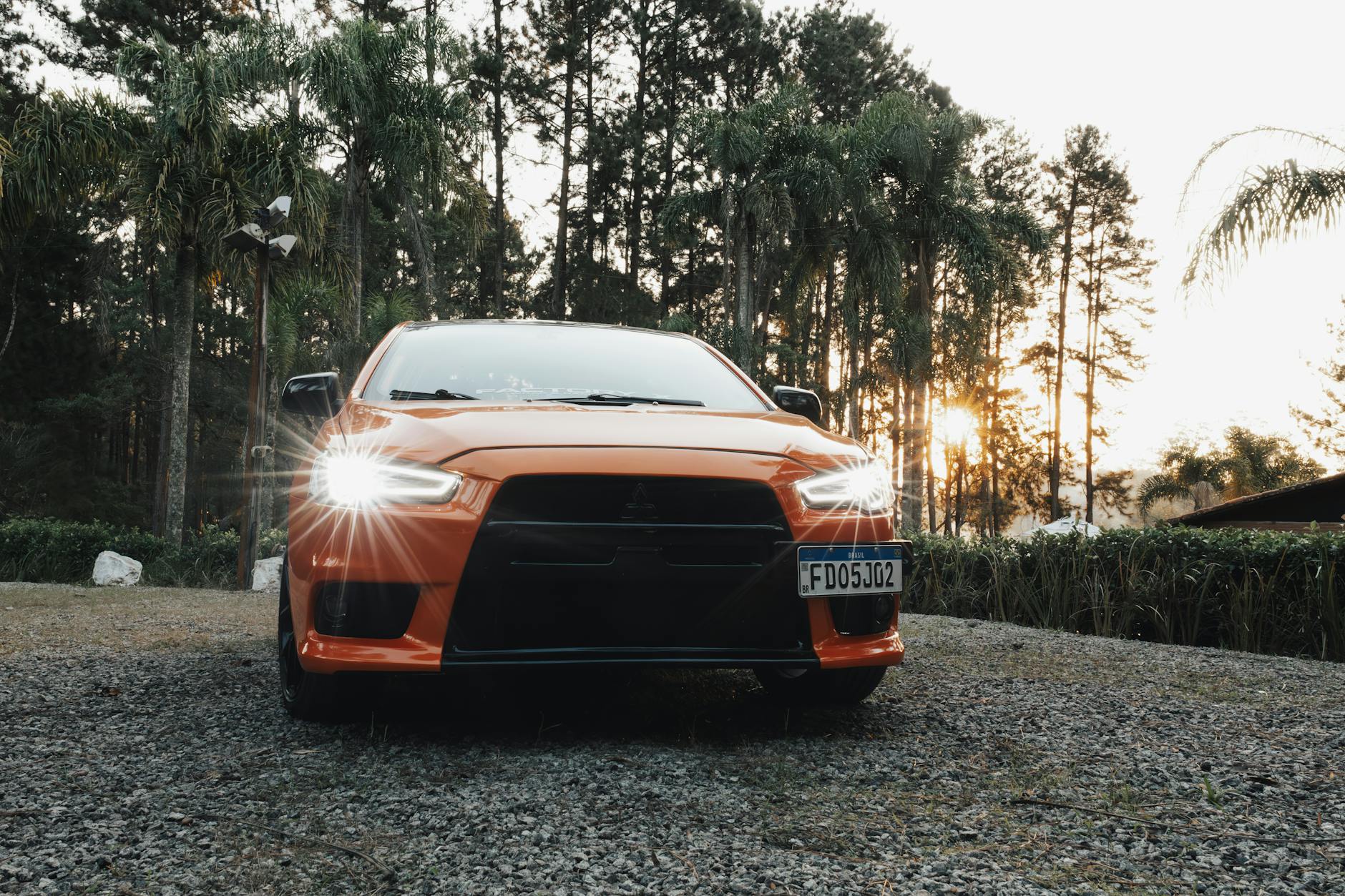
Mitsubishi took a bold step with the 2007 redesign, adopting what the company called its “jet fighter” aesthetic. The shark-nosed front fascia, sharply raked windshield, and aggressive stance represented a dramatic departure from the conservative CS styling. This design language was directly inspired by the Lancer Evolution X, giving even the humble GLX a performance-oriented appearance.
Inside, the 2007+ Lancer featured significantly improved materials with soft-touch dash surfaces on higher trim levels (some markets) and more ergonomic control placement. The instrument cluster gained a futuristic, multi-level design with a central information display. The cabin felt more spacious thanks to the increased wheelbase and improved packaging.
Aging Considerations:
- The bold 2007+ styling has polarized opinions over time — some find it still aggressive and modern, while others feel the exaggerated front end hasn’t aged as gracefully as the CS series.
- Interior materials from both generations have proven reasonably durable, though the 2007+ models show better resistance to UV fading on dashboard plastics.
- Exterior paint quality varied by market and production location, with Japanese-built units typically showing better long-term finish than some regional production facilities.
- Chrome trim elements on later models can be prone to pitting, especially in coastal regions with salt exposure.
Common Cosmetic Issues and Rust Concerns
Like all vehicles of this era, the Lancer GLX has specific vulnerabilities that buyers should be aware of. Understanding these issues can help identify well-maintained examples and avoid money pits.
Rust-Prone Areas
The Lancer’s susceptibility to rust varies by generation and production origin:
CS Series (2000-2007):
- Rear Wheel Arches: The wheel arch lips are the most common rust location, particularly in regions with road salt or high humidity. Rust typically starts at the bottom lip and spreads upward.
- Rockers/Sills: Lower body panels, especially the rocker panels behind the front wheels, can develop rust where road debris accumulates.
- Sunroof Drains (If Equipped): Clogged drain tubes can cause water accumulation in the A-pillars, leading to hidden rust from the inside out.
- Rear Hatch/trunk Opening: The seal around the trunk can trap moisture, leading to rust in the bottom corners of the opening.
2007+ Generation:
- Door Bottoms: The bottom of the doors, particularly the drainage holes, can collect debris and moisture.
- Subframe Mounts: On high-mileage examples in corrosive climates, the front subframe mounting points may show corrosion.
- Fuel Filler Neck: The area around the fuel filler can develop corrosion, especially if the fuel cap seal has degraded.

PRO TIP: “When inspecting a Lancer GLX for rust, pay special attention to the jack points. Many owners jack up the car incorrectly, damaging the structural points and creating rust initiation sites. Use a small inspection mirror and flashlight to check the inside of wheel arches and frame rails — surface rust is normal, but anything that feels flaky or bubbly underneath indicates deeper corrosion that may compromise structural integrity.”
Common Cosmetic and Mechanical Issues
Paint Quality Issues:
- Clear coat peeling was reported on some 2004-2006 CS models, particularly in darker colors and on horizontal surfaces like the hood and roof.
- Pearl and metallic paint finishes have shown better durability than solid colors across both generations.
- Stone chipping on the front bumper and hood is common, and many owners have installed protective film in these areas.
Exterior Trim and Lighting:
- Headlamp lenses on CS models can become cloudy over time, though polishing restores clarity effectively.
- The 2007+ models’ distinctive grille inserts can become loose or develop rattles at highway speeds.
- Chrome window trim on certain market variants may show pitting, especially in coastal environments.
Interior Wear Points:
- Driver’s seat side bolster wear is typical on high-mileage examples.
- The automatic transmission shifter bezel can crack from repeated use.
- Air conditioning control knobs may become sticky or difficult to operate over time.
Fuel Economy, Insurance, and Ownership Costs
Real-World Fuel Consumption
Official fuel economy figures from this era often don’t reflect real-world driving conditions. Based on extensive owner reports and long-term test data, here’s what you can actually expect:
CS Series 1.6L (Manual Transmission):
- City: 8.5-9.5 L/100 km (27-28 mpg)
- Highway: 5.8-6.5 L/100 km (36-41 mpg)
- Combined: 7.0-7.8 L/100 km (30-34 mpg)
CS Series 1.6L (Automatic Transmission):
- City: 9.5-10.5 L/100 km (22-25 mpg)
- Highway: 6.5-7.2 L/100 km (33-36 mpg)
- Combined: 7.8-8.5 L/100 km (28-30 mpg)
CS Series 1.8L (Manual Transmission):
- City: 9.2-10.2 L/100 km (23-26 mpg)
- Highway: 6.2-6.9 L/100 km (34-38 mpg)
- Combined: 7.5-8.2 L/100 km (29-31 mpg)
2007+ 1.8L (CVT Transmission):
- City: 8.8-9.8 L/100 km (24-27 mpg)
- Highway: 6.0-6.7 L/100 km (35-39 mpg)
- Combined: 7.2-8.0 L/100 km (29-33 mpg)
2007+ 1.8L (Manual Transmission):
- City: 8.5-9.5 L/100 km (25-28 mpg)
- Highway: 5.8-6.5 L/100 km (36-41 mpg)
- Combined: 7.0-7.7 L/100 km (31-34 mpg)
NOTE: The CVT transmission in the 2007+ models provides surprisingly good highway fuel economy, though some drivers find its operation less engaging than a traditional automatic. Regular fluid changes are crucial for CVT longevity.
Insurance and Road Tax Considerations
Insurance costs for the Lancer GLX typically fall in the moderate range for compact sedans:
- Liability Coverage: Generally affordable, as the Lancer doesn’t appear on insurance industry lists of high-risk vehicles.
- Comprehensive/Collision: Premiums increase with trim level and engine displacement, with the 1.8L models costing slightly more to insure than 1.6L variants.
- Age Discounts: Vehicles 10+ years old often qualify for significant discounts on comprehensive coverage.
- Road Tax: Varies dramatically by jurisdiction, but engine displacement is the primary factor — 1.6L models typically cost less in annual registration fees than 1.8L or diesel variants.
In the used market, the Lancer GLX has maintained reasonable resale value compared to some rivals, with well-maintained examples commanding prices that reflect their reliability reputation. Diesel variants, where available, typically command a premium due to their superior fuel economy and torque.
Maintenance Intervals and Typical Service Costs
One of the Lancer GLX’s selling points has always been relatively low maintenance requirements. Here’s a breakdown of typical service intervals and costs:
Routine Maintenance Schedule:
| Service Item | Interval | Typical Cost (USD) |
|---|---|---|
| Engine Oil & Filter | 5,000-7,500 miles | $40-80 (DIY: $20-40) |
| Spark Plugs (CS) | 30,000 miles | $80-150 |
| Spark Plugs (2007+) | 60,000 miles | $100-180 |
| Timing Belt (CS only) | 60,000 miles | $400-700 |
| Transmission Service | 40,000-60,000 miles | $80-150 |
| Coolant Flush | 40,000-60,000 miles | $100-200 |
| Brake Pads (Front) | 40,000-60,000 miles | $150-250 |
| Brake Pads (Rear) | 60,000-80,000 miles | $120-220 |
| Air Filter | 15,000-20,000 miles | $20-40 (DIY: $10-20) |
| Cabin Filter | 20,000-30,000 miles | $30-50 |
Common Maintenance Considerations:
- Timing Belt (CS Series): This is the most critical maintenance item on CS-series Lancers. Failure can cause catastrophic engine damage, so don’t neglect it. The 2007+ models use timing chains, eliminating this interval.
- CVT Fluid (2007+ Models): The CVT transmission requires specific fluid (often Mitsubishi J1 or equivalent) and regular changes — typically every 40,000-60,000 miles. Neglect can lead to expensive transmission replacement.
- Suspension Components: Control arms, ball joints, and bushings typically need replacement around 100,000-150,000 miles, depending on driving conditions.
- Oxygen Sensors: These can fail and trigger check engine lights, affecting fuel economy. Replacement typically costs $150-300.
Parts Availability and Costs:
The Lancer benefits from Mitsubishi’s parts network, which remains robust even for older models. Common maintenance parts (filters, brake components, belts) are widely available from both dealers and aftermarket sources. Performance parts are also abundant, thanks to the shared architecture with Lancer Evolution models.
Prices for OEM parts are generally reasonable compared to European rivals, though some specialty components for the 2007+ generation can be expensive. Aftermarket options are plentiful and often provide good value for consumable items like brake pads, filters, and suspension components.
Safety Performance and Crash Test Ratings
Safety was becoming an increasing priority throughout the 2000s, and the Lancer’s performance evolved with changing standards and expectations.
CS Series Safety Performance (2000-2007)
The CS Lancer’s safety performance varied significantly across markets due to different specification levels:
Euro NCAP Ratings (2003 Testing):
- Adult Occupant: 3 stars (out of 5)
- Pedestrian: 2 stars (out of 4)
- Note: Testing protocols have evolved substantially since this era, and a 3-star rating from 2003 would likely translate to lower performance against today’s standards.
Standard Safety Features (Most Markets):
- Dual front airbags
- Three-point seatbelts for all seating positions
- Front seatbelt pretensioners
- ABS on higher trim levels (optional on some GLX variants)
Limitations:
- Side airbags were rarely available on GLX trim levels
- Electronic stability control was not available
- Head-protecting curtain airbags were not offered
- ISOFIX child seat anchors were typically optional
2007+ Generation Safety Improvements
The redesigned Lancer represented a significant safety upgrade:
IIHS Ratings (US Market):
- Moderate Overlap Front: Good
- Side Impact: Good (with optional side airbags)
- Roof Strength: Good
- Head Restraints & Seats: Acceptable
Standard Safety Features (2007+):
- Dual front airbags
- Front side airbags (most markets)
- Side curtain airbags (most markets)
- ABS with EBD (standard)
- Active stability control (ASC) became available on later models
- ISOFIX child seat anchors (standard in most markets)
Notable Safety Improvements:
- Reinforced body structure with improved crumple zones
- Collapsible steering column
- Brake override system (later models)
- Tire pressure monitoring system (depending on market)
PRO TIP: “When buying a used Lancer GLX, prioritize examples with the full complement of airbags. The difference in occupant protection between a base model with only front airbags and one with side/curtain airbags is substantial, especially in side-impact collisions. Many GLX models had side airbags as options, so check the vehicle’s original build sheet or consult a parts catalog using the VIN to confirm factory specifications.”
The GLX’s Connection to Performance Heritage
While the Lancer Evolution grabbed headlines, the GLX benefited from trickle-down technology and engineering from Mitsubishi’s motorsport programs. This shared DNA gives the GLX surprising performance potential for buyers looking to enhance their daily driver.
Architecture Sharing with Evolution Models
The CS series shared its basic platform architecture with the Lancer Evolution VII and VIII, though with significant modifications for comfort, cost, and durability. This meant that many suspension components, brake upgrades, and even some powertrain parts were compatible across models.
The 2007+ generation represented a deeper integration with Evolution X components, with the GLX sharing its fundamental structure with the performance model. This included improved front suspension geometry and a stiffer body structure that contributed to better handling without sacrificing ride comfort.
Mild Modification Potential
For enthusiasts on a budget, the Lancer GLX offers a surprisingly capable platform for light modifications:
Suspension Upgrades:
- Evolution-compatible springs and sway bars fit many GLX models
- Aftermarket coilover systems are widely available
- Larger brake packages from sportier trims often bolt directly onto GLX models
Performance Enhancements:
- Cold air intakes and exhaust systems provide modest gains
- ECU tuning options exist, particularly for 2007+ models
- Turbocharger conversions are possible using Evolution components (advanced modification)
Aesthetic Improvements:
- Evolution-style body kits are readily available
- Wheel upgrades improve both appearance and handling
- Interior upgrades from higher trim levels are often plug-and-play
Important Considerations:
- Ensure modifications comply with local regulations
- Some modifications may affect insurance premiums
- Balance performance gains with reliability, especially on high-mileage examples
- Professional installation is recommended for significant modifications
Buying Guide: What to Look For
When shopping for a used Mitsubishi Lancer GLX, thorough inspection and careful consideration of several factors can help you find a reliable example that will serve you well for years to come.
Pre-Purchase Inspection Checklist
Documentation:
- Complete service history with timing belt replacement records (CS models)
- Owner’s manual and previous maintenance receipts
- Any accident reports or damage history
- Valid registration and emissions certificates
Engine and Transmission:
- Smooth cold start without excessive cranking
- No unusual noises from timing belt area (CS models)
- Smooth transmission engagement (manual) or shifts without hesitation (automatic/CVT)
- No oil leaks around camshaft seals, valve cover gasket, or oil pan
- Coolant should be clean, not rusty or contaminated
Suspension and Brakes:
- No clunking or knocking over bumps
- Straight and true braking without pulling to either side
- Even tire wear pattern
- No vibrations at highway speeds
Body and Paint:
- Careful inspection for rust in wheel arches, rockers, and structural areas
- Consistent paint color across all panels (may indicate repainting)
- Proper alignment of body panels and doors
- No signs of flood damage (mold smell, water stains under carpet)
Interior and Electronics:
- All electronics functioning properly (windows, mirrors, air conditioning, etc.)
- No dashboard warning lights during operation
- Seat belts retracting smoothly and locking properly
- Clean interior with no signs of flood damage or neglect
Common Problem Areas to Investigate
CS Series Specific:
- Timing belt condition and replacement history (critical)
- Engine mount condition (common wear item)
- Automatic transmission shifts should be smooth, no slipping or delayed engagement
- Power steering system for leaks
2007+ Generation Specific:
- CVT transmission operation (should be smooth, no shuddering or hesitation)
- Early models may have had some electrical gremlins — check all functions
- Brake system condition (larger brakes than CS but can still suffer from corrosion)
- Infotainment/electronic system functionality
Universal Concerns:
- Air conditioning performance and leaks (R134a systems can develop leaks at condenser or compressor)
- Exhaust system condition (mufflers often rust out before the rest of the system)
- Tire condition and age (tires over 5-6 years should be replaced regardless of tread)
Value Assessment
When evaluating price, consider these factors:
Premium Justification:
- Lower mileage examples under 100,000 miles
- Complete service history with timing belt replacement confirmed
- Rust-free condition with original paint
- Manual transmission models (often more desirable)
- 2007+ generation with low miles and CVT service history
Discount Negotiations:
- Timing belt replacement overdue or uncertain (CS models)
- Evidence of rust or previous body work
- High mileage without comprehensive service records
- Automatic/CVT transmission with uncertain fluid change history
- Missing or incomplete documentation
Recommended Year and Model Selection
For most buyers, the 2007+ generation represents the best value proposition, offering:
- Modern safety features
- Timing chain design (no belt replacement)
- More refined driving experience
- Better fuel economy with CVT
- Improved interior quality
However, well-maintained CS models can represent exceptional value, particularly the 1.6L manual transmission variants for buyers prioritizing simplicity and fuel economy.
Conclusion: The Lancer GLX’s Enduring Appeal
The Mitsubishi Lancer GLX (2000-2010) remains an underrated gem in the compact sedan market. While it may not have the enthusiast following of its Evolution siblings or the legendary reputation of some rivals, it delivers on the core promises that matter most to everyday drivers: reliability, comfort, practicality, and value.
For budget-conscious buyers seeking dependable transportation that won’t require constant attention at the workshop, a well-maintained Lancer GLX represents a smart choice. Its shared architecture with performance models means those seeking mild modification potential have a capable platform to work with, while families will appreciate the spacious interior and straightforward operation.
The key to satisfaction with any used Lancer GLX is finding a well-maintained example with complete service history. When properly maintained, these cars have proven capable of reliable service well beyond 200,000 miles, making them excellent long-term investments for the practical buyer.
In an era where modern vehicles are becoming increasingly complex and expensive to maintain, the Lancer GLX’s straightforward engineering and proven durability feel almost refreshing. It’s a reminder that sometimes, the best cars aren’t the most exciting or innovative — they’re the ones that simply work, day after day, year after year, without complaint.
Whether you’re a young family buying your first car, a commuter seeking reliable transport, or an enthusiast looking for an affordable platform to modify, the Mitsubishi Lancer GLX deserves serious consideration. It’s a car that has quietly earned its place in automotive history — not through headlines or accolades, but through millions of miles of dependable service for drivers around the world.
And sometimes, that quiet dependability is worth more than all the horsepower and technology in the world.