Fuel Pump Relay Intermittent Failure in 2004–2008 Nissan Altima 2.5L Engines: Testing and Replacement

If you own a 2004–2008 Nissan Altima with the QR25DE 2.5-liter engine, you may already be painfully familiar with this scenario: you turn the key, the engine cranks vigorously, but it won’t fire. You wait ten minutes, try again, and it starts like nothing ever happened. Welcome to the world of intermittent fuel pump relay failure — one of the most widely discussed, yet frequently misdiagnosed, electrical gremlins in this generation of Altima.
Over two decades of turning wrenches and writing about cars, we’ve seen this exact problem strand hundreds of owners in parking lots, driveways, and — worse — traffic. The good news? It’s entirely diagnosable with a basic digital multimeter and about forty-five minutes of your time. The even better news? The fix is cheap. Let’s walk through the entire process from symptom recognition to confirmed repair.
Understanding the Problem: IPDM and the Fuel Pump Relay
What Is the IPDM?
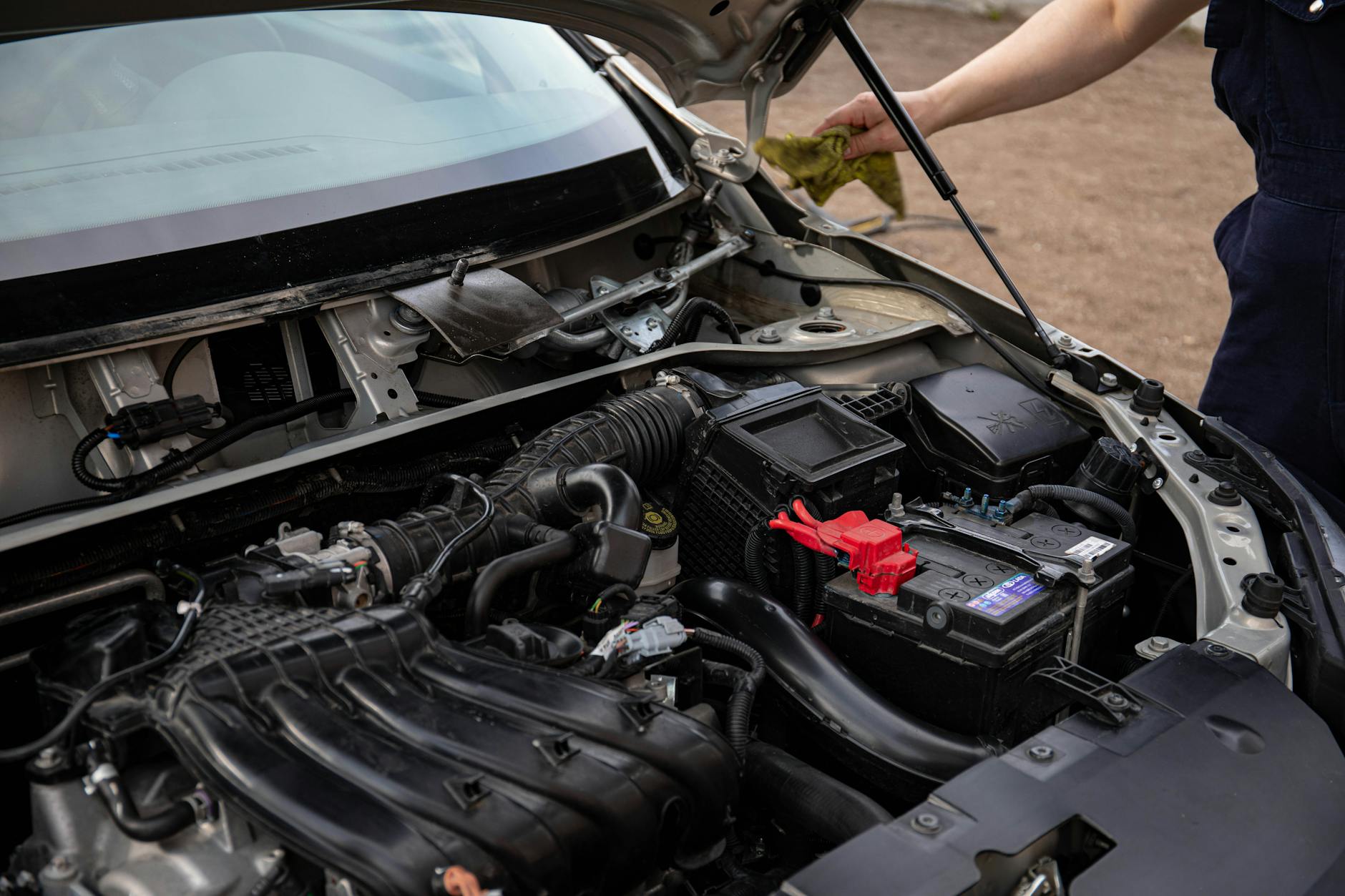
The 2004–2008 Altima uses an Intelligent Power Distribution Module (IPDM) located under the hood on the driver’s side, near the battery and fuse box. Think of the IPDM as a smart fuse box — it houses multiple relays and is controlled by the Engine Control Module (ECM) to manage power distribution to critical systems including the fuel pump, headlights, ignition coils, and cooling fans.
Inside the IPDM (part number 284B7-ZB10B or superseded 284B7-ZB11B), the fuel pump relay is soldered directly onto the printed circuit board. Unlike the larger, serviceable relays for headlights or the starter, this tiny relay is not designed to be individually swapped — a design decision that has frustrated owners and mechanics alike.
Why It Fails
The relay contacts develop electrical pitting and carbon buildup over millions of open/close cycles. In warm weather or after extended driving (when the IPDM heats up), the contacts expand unevenly, causing intermittent open circuits. The relay may click audibly but fail to pass current to the fuel pump. When the module cools down, the contacts reconnect and the car starts normally.
PRO TIP: If your Altima cranks but won’t start after sitting in hot sun or after a long highway drive, but starts fine first thing in the morning, the IPDM fuel pump relay is your prime suspect. Don’t waste money replacing the fuel pump itself until you’ve verified relay operation — the pump is far more expensive and harder to access.
Symptoms: What to Look (and Listen) For
Before pulling out your multimeter, confirm that your symptoms match the failure pattern:
- Engine cranks but does not start — The starter engages normally, but the engine never catches. No sputtering, no partial firing.
- Intermittent occurrence — The no-start condition comes and goes, often correlated with ambient temperature or engine bay heat.
- No fuel pump prime — When you turn the key to the ON position (without cranking), you should hear a brief 2-second hum from the rear of the car. If silence greets you, the pump isn’t receiving power.
- No corresponding check engine light — Because the relay is an electrical distribution component (not an emissions device), the ECM rarely sets a DTC for this failure. You may have zero stored codes.
- All other electrical systems function normally — Headlights, dash lights, radio, and accessories work fine, which eliminates the battery and alternator as culprits.

Tools and Materials Required
Before starting diagnostics, gather these items:
- Digital multimeter (DMM) — Any unit with DC voltage and continuity/ohm functions will work. An auto-ranging meter is preferred.
- Test leads with alligator clips — Hands-free connections make relay testing much easier.
- Jumper wire (14–16 gauge, 6 inches) — For the bypass verification test.
- Needle-nose pliers — For relay terminal access.
- Flashlight or headlamp — The IPDM area has poor visibility.
- Service manual or wiring diagram — Nissan factory service manual (FSM) for your specific year is ideal. Community resources like Nicoclub.com host free FSMs.
Optional but helpful:
- Noid light (for injector pulse verification)
- Fuel pressure gauge (0–100 PSI)
- Replacement IPDM (if you want the part on hand before testing)
Diagnostic Sequence: Step-by-Step Multimeter Testing
Step 1: Verify the No-Start Condition
Before disassembling anything, reproduce and document the symptom:
- Turn the key to ON (position II). Listen carefully at the rear seat area for the fuel pump prime — a low hum lasting about 2 seconds.
- If you hear nothing, have an assistant crank the engine while you listen at the fuel tank.
- If the pump is silent during both prime and cranking, proceed to Step 2. (If you hear the pump running, your problem is elsewhere — check fuel pressure, spark, and crank position sensor.)
Step 2: Access the IPDM
- Open the hood and locate the IPDM on the driver’s side, next to the battery. It’s a black plastic box roughly 6″ × 8″ with a removable cover.
- Remove the top cover by pressing the retaining clips on both sides. Set the cover aside.
- Inside, you’ll see several large, plug-in relays and a cluster of fuses. The fuel pump relay is not one of these — it’s the smaller relay soldered onto the circuit board beneath the socketed relays.
PRO TIP: Take a clear photo of the IPDM with the cover off before touching anything. When you’re elbow-deep in testing wires, you’ll be glad you have a reference for connector positions and wire colors.
Step 3: Test for Power at the Fuel Pump Fuse
- Locate the fuel pump fuse (typically 15A, labeled “FUEL PUMP” on the IPDM cover diagram). In the 2005–2006 Altima, this is usually position F4 or F6.
- Set your multimeter to DC voltage (20V range).
- With the key ON, probe both sides of the fuse:
- Both sides show ~12V: Fuse is good. Continue to Step 4.
- Only one side shows ~12V: Fuse is blown. Replace and retest.
- Neither side shows ~12V: Power isn’t reaching the fuse — the relay is likely not closing. Continue to Step 4.
Step 4: Test Relay Control and Output Circuits
This is where we isolate the relay itself. You’ll need to back-probe the appropriate connector pins at the IPDM.
Pin identification (2004–2006 Altima 2.5L):
- Pin 1 (Ground): Controlled by ECM (relay coil ground)
- Pin 2 (Battery +): Constant 12V from main power bus
- Pin 3 (Output to fuel pump): Should show 12V when relay is energized
- Pin 5 (Ignition signal): 12V when key is in ON/START
Testing procedure:
- Set your DMM to DC voltage. Connect the black lead to a known good chassis ground.
- Test Pin 2 with the key OFF. You should see battery voltage (~12.4V). If not, check the main power feed and fusible links.
- Test Pin 5 with the key ON. You should see battery voltage. If not, the ignition feed circuit has a problem.
- Test Pin 3 (fuel pump output) while an assistant turns the key to ON. You should see 12V for approximately 2 seconds during prime, then it drops to 0V. During cranking, it should show a steady 12V.
- If Pin 3 shows 0V during prime and cranking, but Pins 2 and 5 are live — the relay contacts are not closing. The relay has failed.

Step 5: Continuity Test (Relay Coil Verification)
To confirm the relay coil itself is intact:
- Disconnect the negative battery terminal.
- Set your DMM to ohms (Ω).
- Probe between the relay coil pins (typically the ECM ground control pin and the ignition feed pin on the IPDM board — consult your FSM for exact pinout).
- A functional relay coil reads 70–120Ω.
- An open circuit (OL or infinite resistance) means the coil is burned out. A near-zero reading suggests a shorted coil.
PRO TIP: If the relay coil tests fine on the bench but the relay still doesn’t pass current during operation, the contacts are the culprit. Contact failure won’t show up on a simple coil resistance test — you must verify voltage output during the actual key-ON/crank cycle. This is why Step 4 is critical and Step 5 alone is not sufficient.
Step 6: Bypass Verification Test
This is the definitive test. If the bypass starts the car, the relay is confirmed failed.
- Locate the fuel pump power output wire at the IPDM connector (refer to your FSM — typically a blue/orange or blue/white wire on pin 3 of the fuel pump relay circuit).
- Locate a constant 12V source — the battery positive terminal is easiest for testing.
- With the key OFF, connect a jumper wire from battery + to the fuel pump output terminal on the IPDM connector. You should immediately hear the fuel pump running.
- Now crank the engine with the jumper still in place. If the engine starts and runs smoothly, you have confirmed that the fuel pump and its wiring are functional — the relay was the only problem.
Important: This bypass is for diagnostic purposes only. Do not drive the car with this temporary jumper in place, as the fuel pump will run continuously (even with the engine off), creating a fire hazard and battery drain.
Replacement Options and Costs
Once you’ve confirmed the IPDM fuel pump relay failure, you have three paths forward:
Option 1: Replace the Entire IPDM (Recommended)
Since the fuel pump relay is soldered to the board, the standard repair is a complete IPDM replacement.
- New OEM IPDM (Nissan part): $280–$450
- Remanufactured IPDM: $150–$220
- Used IPDM from salvage yard: $50–$120 (verify part number matches)
- Labor (independent shop): $75–$150
- Labor (dealership): $150–$300
Total out-the-door cost at an independent shop: $225–$370.
Option 2: Repair the Existing IPDM Board
Some experienced DIYers and specialized electronics repair shops can desolder the failed relay and solder in a replacement relay component (Omron G8HE or equivalent, ~$8–$15 for the relay alone).
- DIY relay replacement: $8–$20 in parts (requires soldering iron, desoldering braid, moderate electronics skill)
- Professional board repair service: $100–$180 (search for “IPDM repair” on eBay or specialized Nissan forums)
PRO TIP: If you go the board repair route, replace the relay with an upgraded unit rated for higher current (20A minimum). Several forum members on Nicoclub and NissanHelp have reported that upgraded relays outlast the original Omron units by a significant margin. Also inspect all solder joints on the board while you have it open — hairline cracks at other relay pins are common on high-mileage modules.
Option 3: External Relay Bypass (Budget/Emergency Fix)
Some owners install an external automotive relay (Bosch-style 30A, ~$10) to bypass the internal IPDM relay entirely. The external relay is triggered by the original ECM control wire and powers the fuel pump directly from the battery through an inline fuse.
- Parts (relay, socket, wire, fuse holder, fuse): $15–$30
- Installation time: 1–2 hours
While functional, this approach adds complexity and potential failure points. We recommend it only as a temporary fix or budget solution on high-mileage cars where a full IPDM replacement isn’t economical.

Step-by-Step IPDM Replacement Procedure
If you’ve opted for the full replacement (our recommended approach), here’s the procedure:
- Disconnect the negative battery terminal with a 10mm wrench. Wait 5 minutes for residual charge to dissipate.
- Remove the IPDM cover (press side clips).
- Label and disconnect all wire harness connectors. There are typically 4–6 connectors depending on year and trim. Use masking tape and a marker.
- Remove the IPDM mounting bolts (usually two 10mm bolts securing the module to the bracket).
- Transfer all fuses from the old IPDM to the new one — the replacement module typically ships without fuses installed.
- Install the new IPDM in reverse order. Tighten mounting bolts to 7 ft-lbs.
- Reconnect all wire harnesses using your labels as reference.
- Reconnect the battery.
- Turn the key to ON (don’t crank yet) and listen for the fuel pump prime. You should hear the familiar 2-second hum.
- Start the engine. It should fire immediately. Let it idle for 5 minutes and verify no warning lights on the dash.
- Clear any stored codes with an OBD-II scanner (there may be historic codes from previous no-start events).
Prevention and Long-Term Reliability
After replacing the IPDM, take these steps to maximize longevity:
- Keep the battery terminals clean and tight. Voltage fluctuations from poor connections stress relay contacts.
- Avoid jump-starting other vehicles from your Altima — the current surge can damage IPDM components.
- Inspect the IPDM connector seals annually. Corroded pins increase resistance and heat buildup.
- If you live in a hot climate, consider adding a reflective heat shield between the IPDM and the exhaust-side of the engine bay. Heat is the primary accelerator of relay contact degradation.
Summary and FAQ
Key Takeaways
The fuel pump relay inside the IPDM is the most common cause of intermittent no-start conditions on 2004–2008 Nissan Altima 2.5L models. The failure is temperature-sensitive, leaves no diagnostic trouble codes, and is easily confused with a failed fuel pump. A systematic multimeter-based diagnostic sequence — confirming lack of power at the fuel pump fuse, verifying relay output at the IPDM, and performing a bypass test — will conclusively identify the problem. Replacement of the full IPDM unit is the most reliable repair, costing $225–$370 at an independent shop.
Frequently Asked Questions
Q: Can I test this without a multimeter? A: Not reliably. You can try the bypass test (Step 6) with a simple jumper wire and listen for the fuel pump, but a multimeter is essential for definitively isolating the relay from other potential failures (crank sensor, fuel pump, wiring). A basic DMM costs $20–$30 and is one of the best investments a DIY mechanic can make.
Q: Will a bad fuel pump relay trigger a check engine light? A: Almost never. The relay is a power distribution component, not monitored by the OBD-II emissions system. Your scanner will likely show zero codes, which is one reason this problem is so frequently misdiagnosed.
Q: How long does the replacement IPDM last? A: A new OEM unit typically lasts 80,000–120,000 miles or 8–10 years. Remanufactured units vary depending on the quality of the relay used in the rebuild.
Q: Is this problem specific to the 2.5L engine? A: The 2.5L QR25DE is the most commonly affected, but 2005–2007 Altima 3.5L V6 models with the same IPDM design (part number 284B7-ZB10B) can experience identical failures. The diagnostic procedure is the same for both engines.
Q: My car stalled while driving — could this be the same issue? A: Yes. An intermittent relay can fail while the engine is running, cutting power to the fuel pump and causing an immediate stall. If the car restarts after sitting for 10–20 minutes, the IPDM relay is the prime suspect. However, a stalling scenario warrants a thorough check of the crankshaft position sensor as well, which is another known failure point on the QR25DE.
Q: Can I drive with the bypass jumper in place temporarily? A: Technically yes, but it’s unsafe. The fuel pump will run continuously with the key in any position, including OFF if wired to constant battery. At minimum, connect the jumper to an ignition-switched 12V source so the pump shuts off with the key. Better yet, complete the proper repair before relying on the car daily.